

July: Reads + Recommendations
Justice, Conversion, Whimsy, Mystics, and Quests

January: Reads + Recommendations
February: Reads + Recommendations
March: Reads + Recommendations
April: Reads + Recommendations
May: Reads + Recommendations
June: Reads + Recommendations
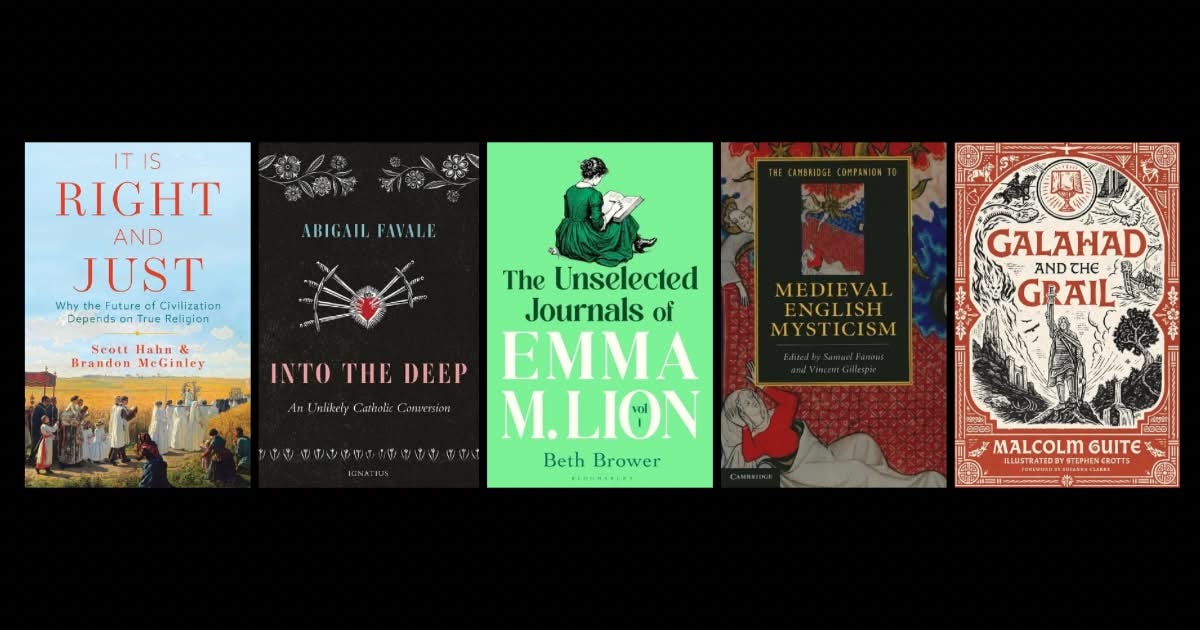
I read five books in July; there was an exploration of justice, a conversion narrative by one of my favorite writers, a slice of whimsy, a book that made mysticism dull, and a brilliant retelling of the quest for the Holy Grail…
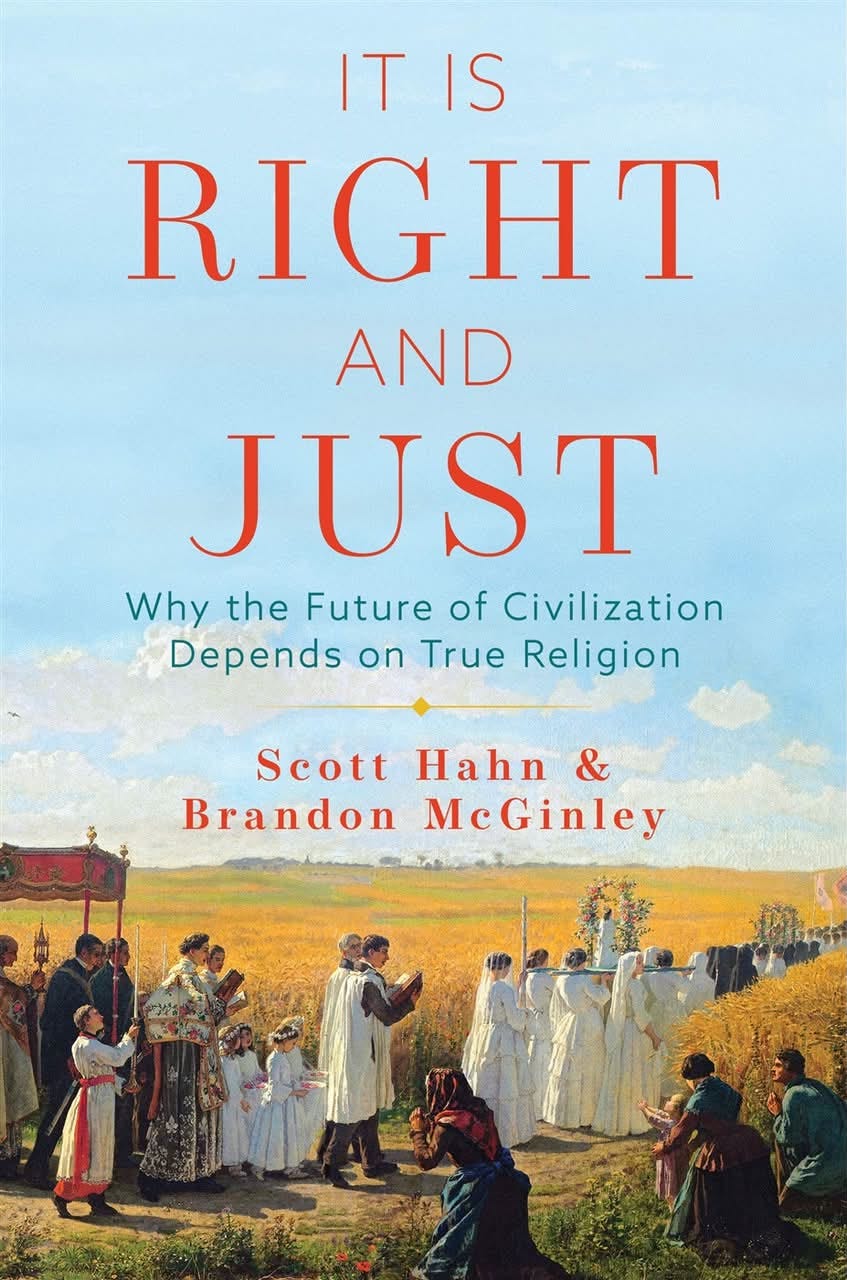
It Is Right and Just
by Scott Hahn & Brandon McGinley (2020)
Hahn and McGinley argue against the modern belief that religion should remain a private matter, making the case that a society’s understanding of justice inevitably rests upon religious foundations.
This book builds a cohesive argument that liberal societies are essentially idolatrous because they treat individual choice as the ultimate arbiter of morality. The claim of liberal societies - that they provide a neutral marketplace of ideas - is actually impossible because every society adheres to some absolute value. By ignoring God, liberalism ends up elevating the state into the supreme force, and people idolize things like consumer goods, political parties, or economic progress. Hahn and McGinley argue that reintegrating faith into public life will restore the true meaning of justice, safeguard human rights, and heal our broken culture. This is an accessible and important read, though not as engaging as many of Hahn’s other works.
“To “forget God” then, is not just to have a lapse of memory. It is to ignore the foundational duties of justice that are part of our very nature as human beings. And it is to detach oneself - and eventually, one’s community and nation - from reality itself.”
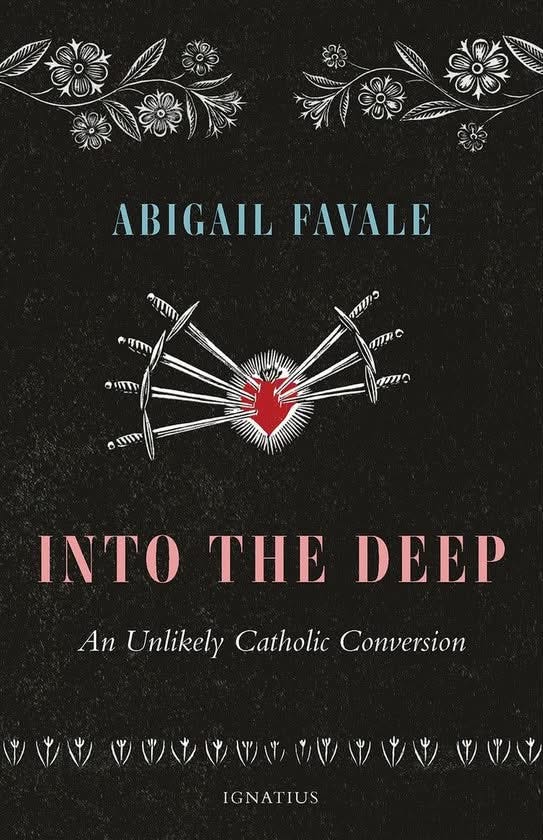
Into the Deep: An Unlikely Catholic Conversion
by Abigail Favale (2024)
Part memoir and part intellectual journey, Favale recounts her path from evangelical Protestantism to nearly-secular feminism to Catholicism. Along the way, she reflects on questions of theology, embodiment, and the search for truth.
When I see anything by Abigail Favale, it goes straight onto my reading list. I wrote a review of her other book, which is about feminism and gender ideology, and love the way she writes and thinks. Her work is luminous with the beauty of its prose, the sincerity of her thought, and the depth of her knowledge of theology. This memoir recounts her winding journey from her evangelical youth to her years as a doubting-everything feminist to a devout Catholic university professor. It is not just a personal story, but a step-by-step account of the theological arguments she has with herself in order to understand her own conversion. She delves into her own past to grapple with Catholic sexual morality, the all-male priesthood, and how her true conversion only began after she entered the Church when she discovered “the startling beauty of a sacramental cosmos…”
“In those first months of discernment, I became captivated by the Catholic imagination, with its double vision. My taste for paradox, for mystery, had been an anticipation of this and found new completion there. Metaphors still flourished, but what they revealed was real, not simply creative human conjurings. God has etched into the created order echoes and figures that signal a divine reality. Nothing is ever simply itself, but is also a mirror of God.”
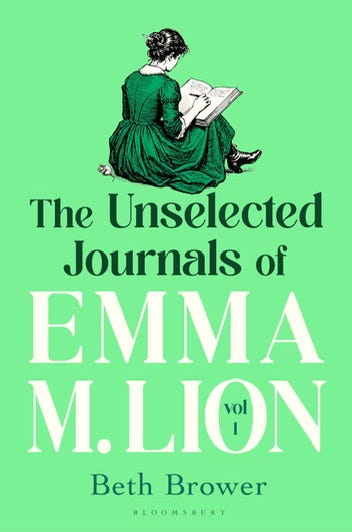
The Unselected Journals of Emma M. Lion, Vol. 1
by Beth Brower (2019)
Set in Victorian London, this novel follows the witty and observant Emma M. Lion as she records the gentle dramas of daily life, friendship, family, and unexpected mysteries in her journals. It blends whimsical humor, rich historical detail, and memorable characters - with a dash of magic.
I’ve seen this book recommended all across BookTok and while it’s premise was catnip - a plucky Victorian woman trying to make it in a fantastical London neighborhood - I hesitated because the premise is also fairly common and not always done well. But what a surprise and delight it was to read this book and discover just how much fun it is! Brower spins plots effortlessly, pulling together the whole neighborhood of St. Crispians, as well as Emma’s extended family, conjuring a world that feels real even as it is subtly brushed with a hint of magic. This is the first in a series of books and they are each written to cover about two months of Emma’s life, making them short and sweet. Such a fun, whimsical read!
“Admittedly, there are some unusual things about the neighborhood. The architecture in places could be called eccentric. The flora and fauna tend to grow at an astonishing rate. It also must be disclosed that there are some other peculiarities we tend not to discuss openly outside the neighborhood. But truly, St. Crispian’s is almost perfectly normal.
Almost.”
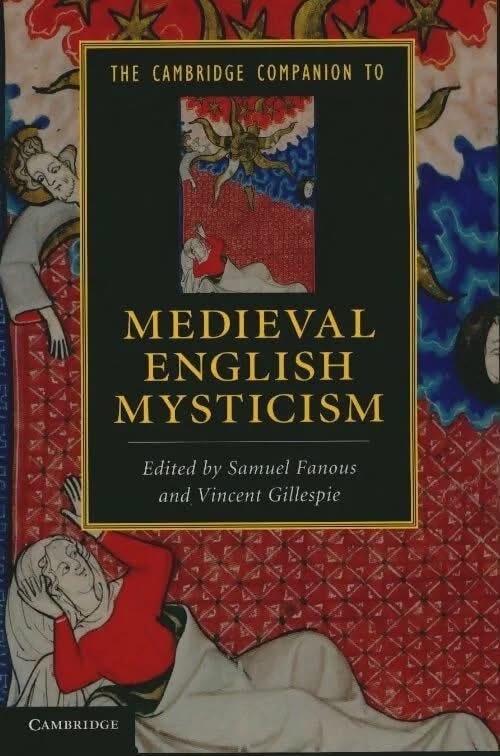
The Cambridge Companion to Medieval English Mysticism
edited by Samuel Fanous and Vincent Gillespie (2011)
This is a scholarly survey of the major figures, texts, and themes of medieval English mysticism, including writers such as Julian of Norwich, Walter Hilton, and the author of The Cloud of Unknowing. It places these works within their historical context while exploring the nature of medieval spirituality.
This book takes two things I normally feel giddy about - medieval English history and mysticism - and made them a trifle dull. It is comprehensive and a solid resource, to be sure, but there are ways to write about this and make the time period and the thinking come alive. It does do a good job of making it clear that mysticism was not confined to a rarefied elite, but something that permeated much of medieval English society. Another thing I did appreciate was how the chapters alternate between giving a historical snapshot of a specific period before delving into the mysticism of that era. This is a very useful resource but not a particularly thrilling read.
“From Augustine to Eckhart, the ‘I’ who ascends to God is at once an individual undergoing an experience and a representative of humanity in general, tracing a predestined trajectory away from the world of appearances back to the Creator.”
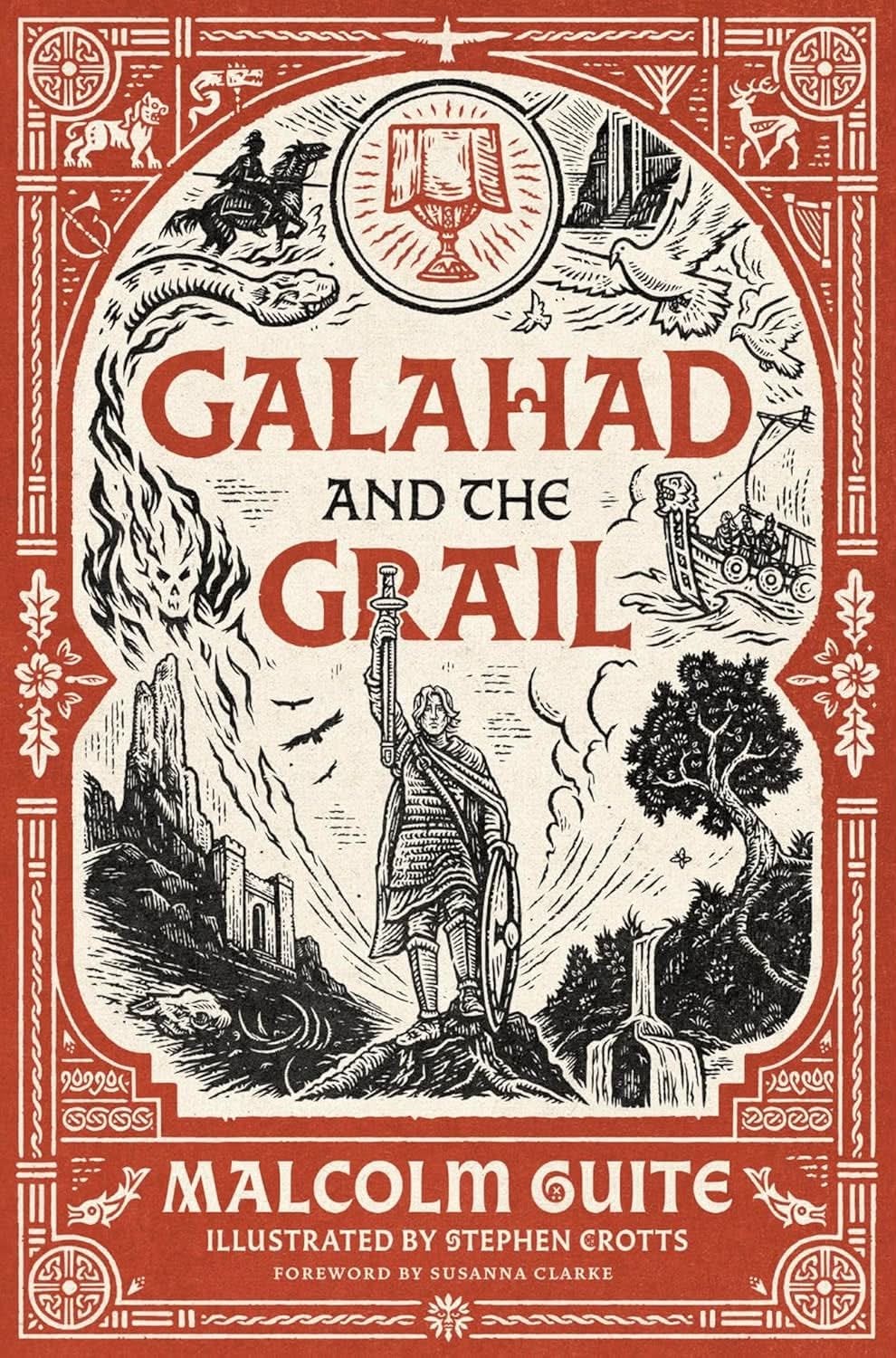
Galahad and the Grail
by Malcolm Guite (2026)
Malcolm Guite retells the story of Sir Galahad’s quest for the Holy Grail, exploring its rich Christian symbolism and deep spiritual meaning.
I may have my quibbles with Guite when it comes to his political thoughts on the Matter of Britain, but his latest book is a masterpiece. Told in ballad form, it is perfect for reading aloud, which I did with my husband in the evenings. The story unfolds, rousing and dreamlike, capturing the surreal wonder of knightly quests, interweaving the earthly with the heavenly. There is peril, romance, and the wonders of the natural world. Most moving of all are the moments of mystic piety, when the knights brush up against the divine in scenes of sublime beauty, always returning the reader’s attention to God.
“As though the Grail an isthmus were
between the earth and Heaven.
Earth rose, but also Heaven came down,
and the whole Grail, from stem to crown,
was where they met with glory crowned,
and all of us on God’s good ground
seemed given and forgiven.”