
May: Reads + Recommendations
Family Drama, Brutal Bunnies, and Deep Heaven

January: Reads + Recommendations
February: Reads + Recommendations
March: Reads + Recommendations
April: Reads + Recommendations
As I mentioned in my previous post, I’m on a sabbatical from weekly essay writing as I dream my next book into existence.
But, as promised, I have returned with reviews of the books I read in May. I read five books this month, all fiction, and I added a few books to my “best of all time” category…
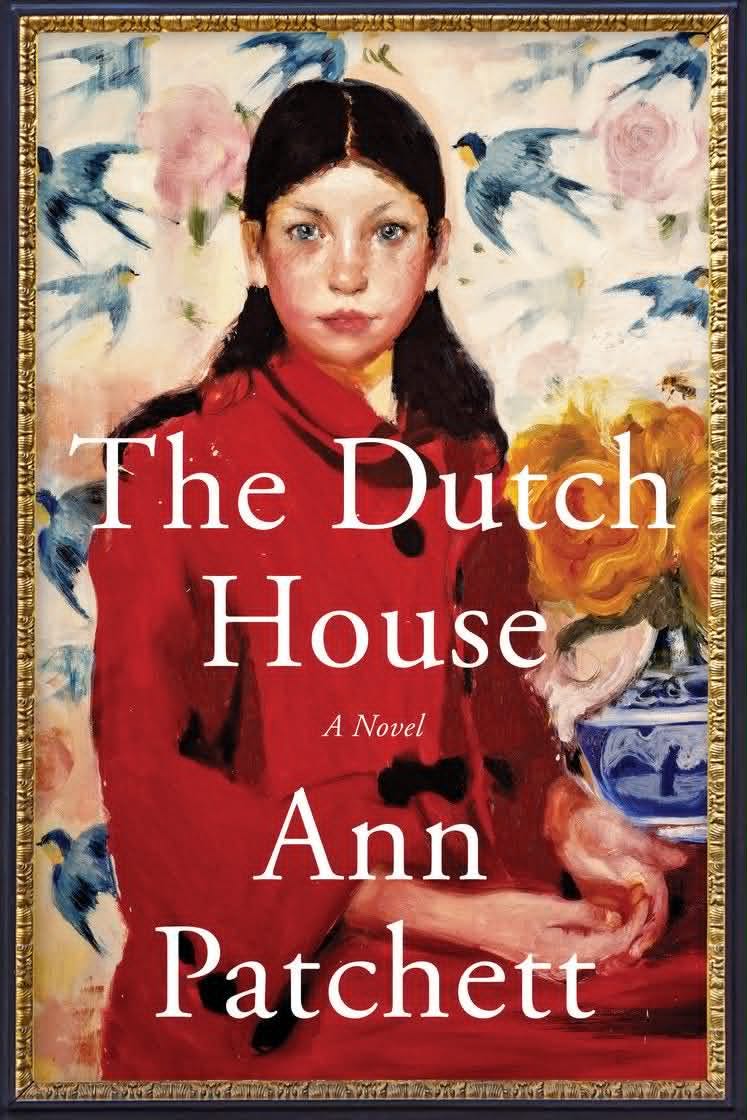
The Dutch House
by Ann Patchett (2019)
A brother and sister are exiled from the lavish house in which they grew up and they spend decades orbiting the memory of it.
This was a rich tapestry of family life, captivating - but not quite as beguiling as the other Patchett book I read this year. This story grapples with memory, family wounds, and the weighty power of home. Patchett’s storytelling is nimble, the narrative slipping forward and backward with deft precision, to make reading the novel a page-turning experience even if the narrative itself is rather predictable. The world conjured - the long history of a house and how it shapes the lives of those who move through it - was engrossing enough while I was reading, but it never quite achieved the emotional force or lasting impact I wanted.
“But we overlay the present onto the past. We look back through the lens of what we know now, so we’re not seeing it as the people we were, we’re seeing it as the people we are, and that means the past has been radically altered.”
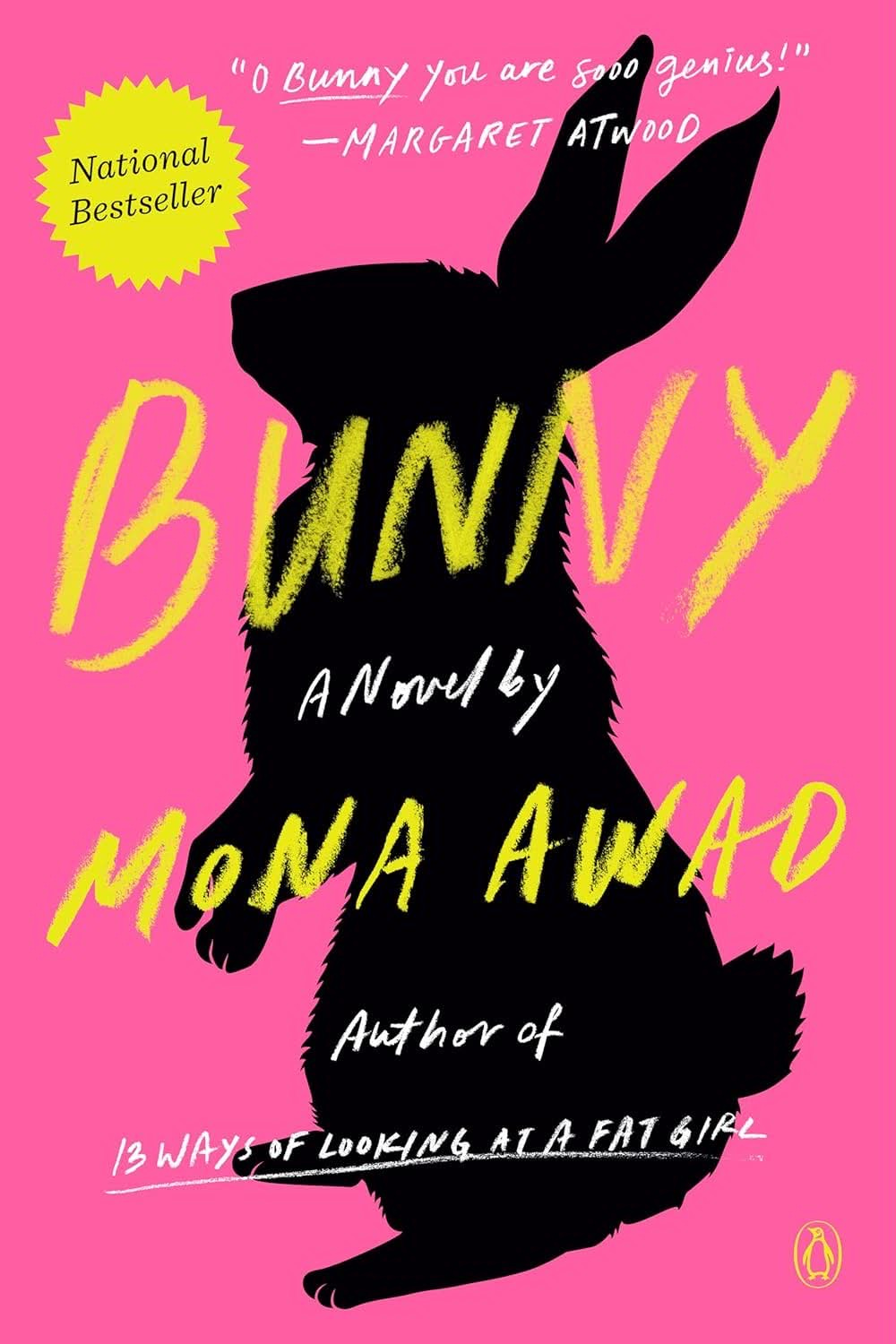
Bunny
by Mona Awad (2020)
A lonely MFA student at an elite writing program is drawn into a bizarre clique of wealthy girls called “the Bunnies” and their seemingly twee rituals spiral into surreal, unsettling horror.
This book has had a spot in every round-up of “weird girl” lit picks since it was published and I’m glad I finally got around to reading it. It’s not the kind of book I’d recommend to just anyone; you have to enjoy dark, weird magical realism and thorny skewerings of creative writing programs. The prose was beautiful, the world felt deliciously gnarly, and the haunting sense of alienation at the heart of the story felt honest to any odd, friendless girl who ever wished she could live between the pages of a book. It was a bit long-winded and overwrought at times but as it is about young women being mad and pompous and cruel it felt less like a misstep and more like a deliberate stylistic choice. Bombastic, beastly, and strange - fun for the right reader.
“The night is a waterfall of music and lights. The night is a rabbit hole into which we enter, hand in mesh hand. The night is a dark earth I could dig my hands into forever. The night becomes a page of literature that I would, at sixteen, press against my heart.”
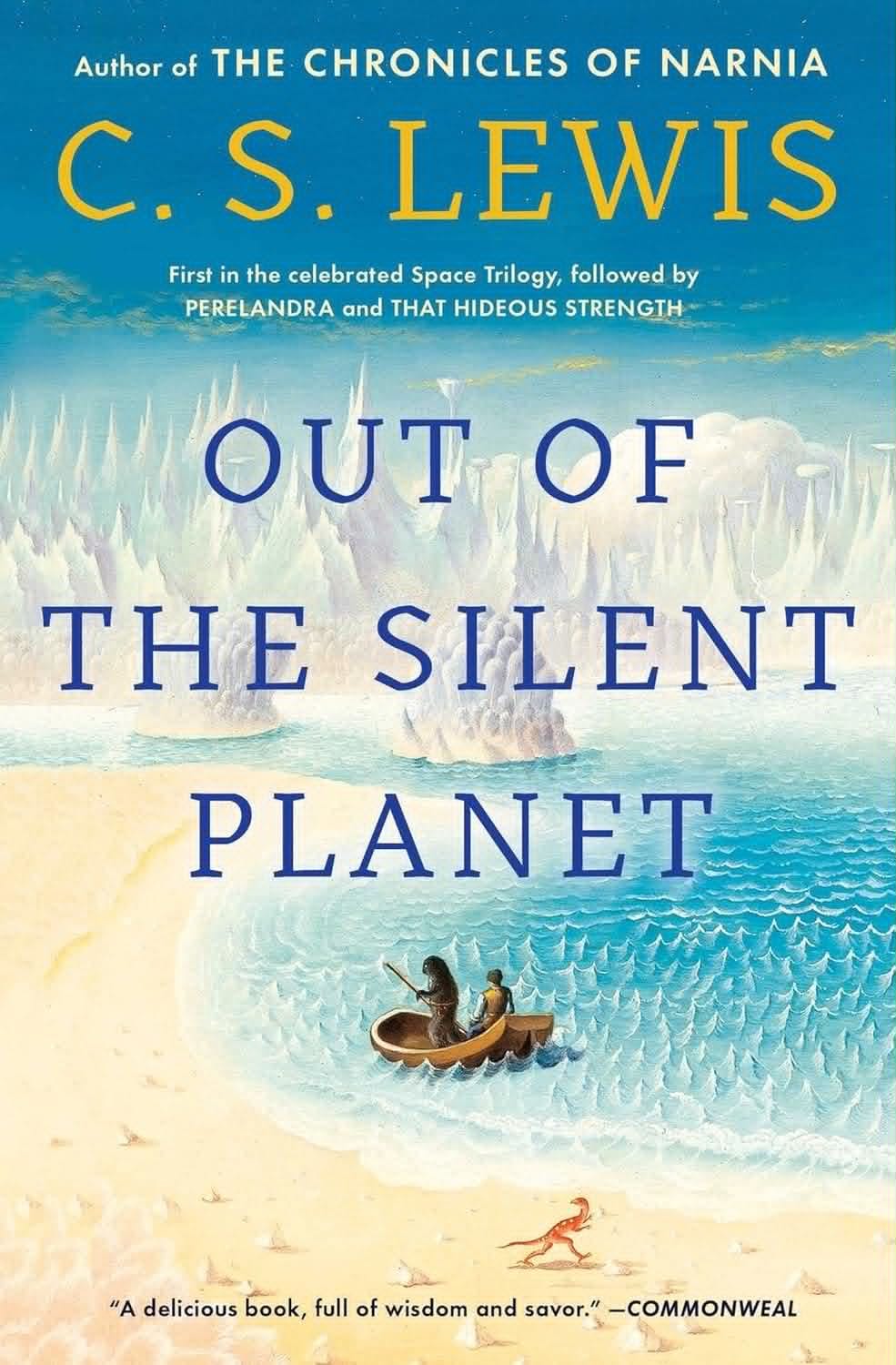
Out of the Silent Planet
by CS Lewis (1938)
An English academic named Ransom is kidnapped to Mars, where he discovers a world filled with intelligent life and is forced to confront both cosmic wonder and the distortions of human ambitions.
I never thought any books could come so close to conjuring in me the heady, dreamlike magic of Narnia - but Lewis’s Space Trilogy does and that is what earns them inclusion in my “best books ever” category. Out of the Silent Planet doesn’t quite reach the dazzling perfection of the last two books in the trilogy, but it starts Ransom’s cosmic adventures. Weaving through the story of space travel and aliens, Lewis explores the theology of the cosmos in a way that made my heart sing, by imagining space as a radiant, spiritually-saturated creation filled with intelligences under God’s authority. Earth is known as “the silent planet” because it has fallen into rebellion, becoming cut off from the harmony and music of the heavens.
“But Ransom, as time wore on, became aware of another and more spiritual cause for his progressive lightening and exultation of heart. A nightmare, long engendered in the modern mind by the mythology that follows in the wake of science, was falling off him. He had read of ‘Space’: at the back of his thinking for years had lurked the dismal fancy of the black, cold vacuity, the utter deadness, which was supposed to separate the worlds. He had not known how much it affected him till now-now that the very name ‘Space’ seemed a blasphemous libel for this empyrean ocean of radiance in which they swam. He could not call it ‘dead’; he felt life pouring into him from it every moment. How indeed should it be otherwise, since out of this ocean all the worlds and all their life had come? He had thought it barren: he now saw that it was the womb of worlds, whose blazing and innumerable offspring looked down nightly even upon the earth with so many eyes-and here, with how many more!”
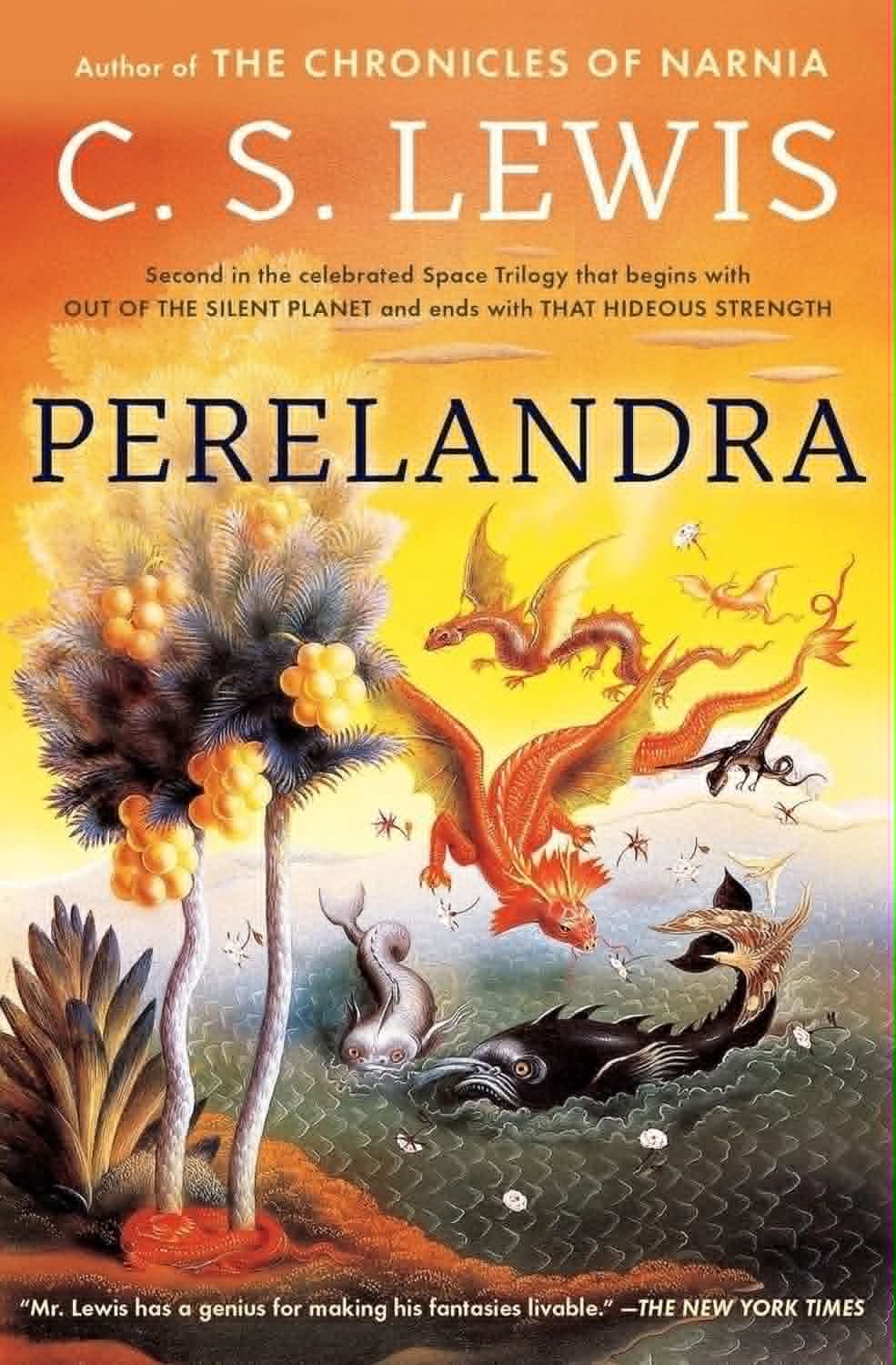
Perelandra
by CS Lewis (1943)
Ransom travels to Venus, known as Perelandra, and becomes part of a profound spiritual battle over whether an unfallen world will remain innocent or repeat humanity’s rebellion.
Of all three of the books in the Space Trilogy, Perelandra reminded me of Narnia the most. It is a dreamlike book, haunting and pure. Ransom discovers that Venus is a world of floating islands, golden seas, and garden-like abundance. Lewis brilliantly reimagines the deepest spiritual battle in startlingly archetypal form: innocence confronted by temptation, unfolding with mythic vividness in an otherworldly Eden. As always, Lewis has a way of turning theological and philosophical arguments inside out, making them breathtakingly new.
“Long since on Mars and more strongly since he came to Perelandra, Ransom had been perceiving that the triple distinction of truth from myth and both from fact was purely terrestrial-was part and parcel of that unhappy distinction between soul and body which resulted from the fall. Even on earth the sacraments existed as a permanent reminder that the division was neither wholesome nor final. The Incarnation had been the beginning of its disappearance. In Perelandra it would have no meaning at all.”
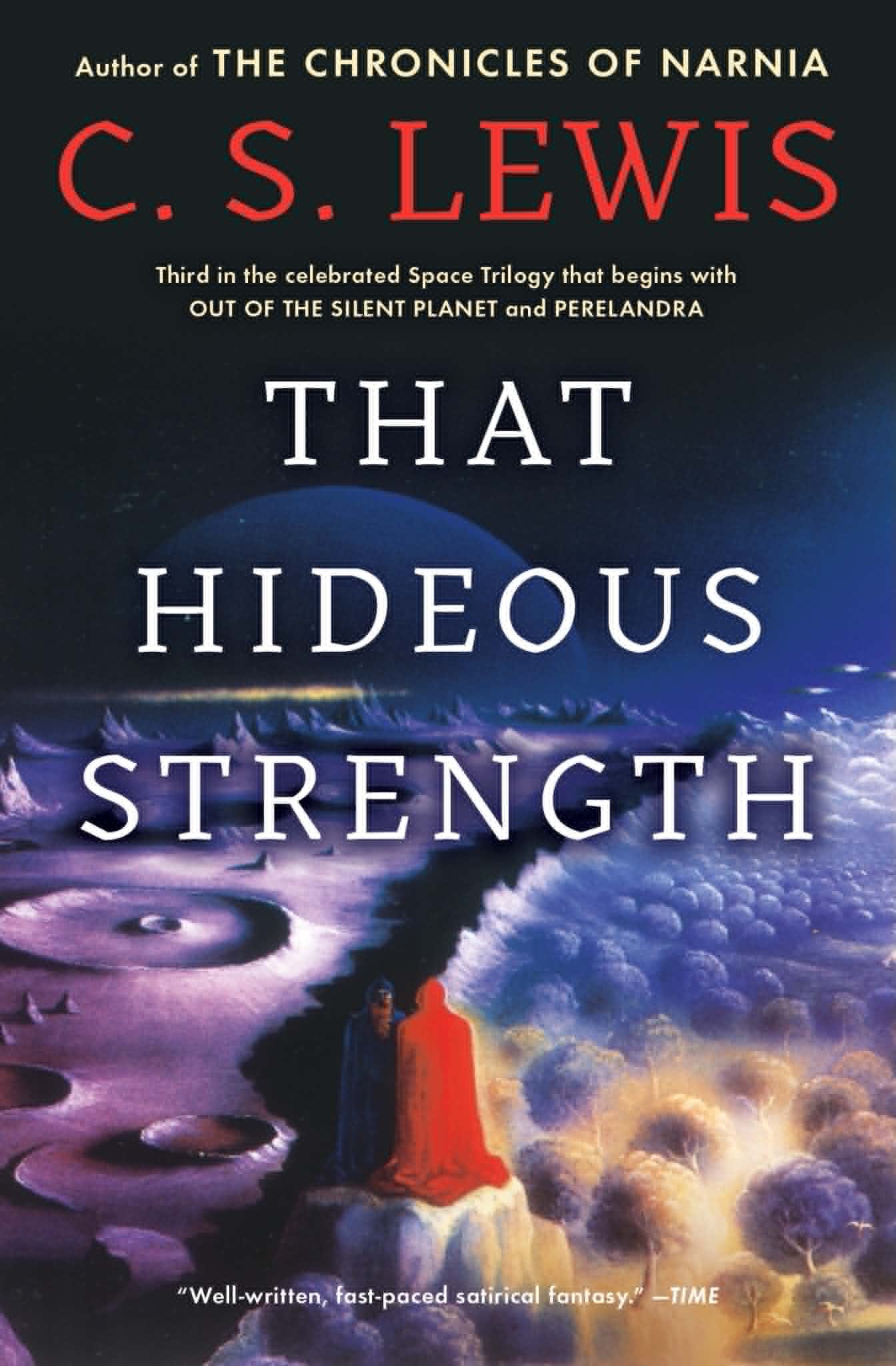
That Hideous Strength
by CS Lewis (1945)
In England, a sinister scientific institution - the National Institute of Co-ordinated Experiments, known as NICE - seeks total, technocratic control over humanity, while a small group resists with a vision of creation rooted in meaning, hierarchy, and the supernatural.
This is my favorite book of the Space Trilogy; I wanted to crawl inside it and live inside the clubby atmosphere of the bucolic English college town (before NICE takes over, of course). The plot follows a married couple, Mark and Jane Studdock, as they are drawn into opposing sides of a mounting spiritual war - Mark into the orbit of NICE, and Jane into the group resisting it. This novel is a warning about the modern urge to conquer nature and subjugate mankind to “technical expertise” that wants to forcibly “improve” society until nothing truly human remains. Within this, Lewis weaves Arthurian legend and the sense of the English countryside itself being saturated with a spiritual reality. The planetary archetypes of the earlier books are pulled in to the story in the most dazzling ways. The result gathers everything the Space Trilogy has been building - the cosmic order, spiritual warfare, and theology - and brings it crashing into ordinary human life with exhilarating force. It is sumptuous, hearty, thrilling, and perfect.
“High above the last rags of scurrying clouds hung the Moon in all her wildness-not the voluptuous moon of a thousand southern love songs, but the huntress, the untamable virgin, the spearhead of madness.”