
February: Reads + Recommendations
Strong Gods, Total States, Culture Transplants, Operatic Hostages, and American Patriots

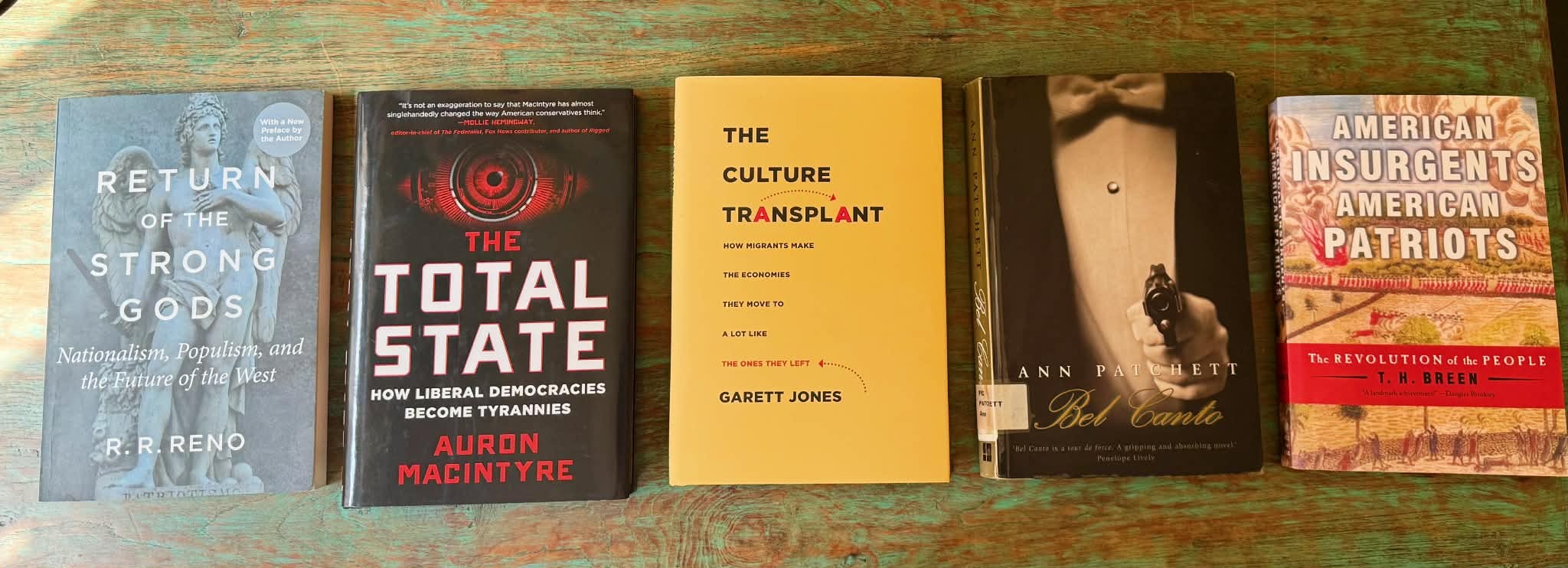
I read five books in February. I’m in the research phase of a writing project so, if you follow this monthly series, you might notice certain themes cropping up again and again. This month I was reading about the post-war consensus, the flaws of liberal democracies, the economic reality of immigration, and a people’s history of the American Revolution - plus a novel with a beguiling premise.
Here are the reviews + a round-up of some of the best essays I read this month:
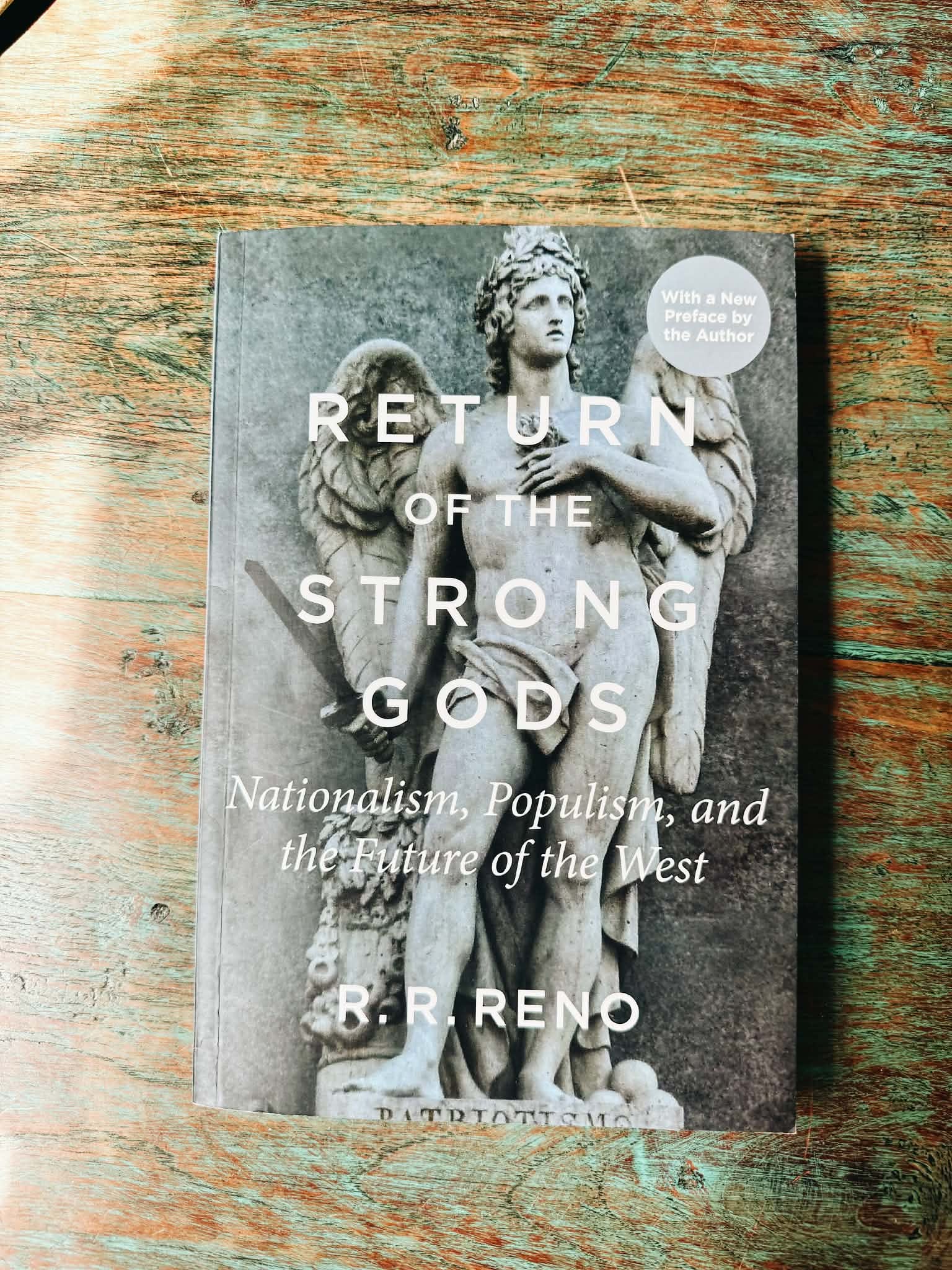
The Return of the Strong Gods
by R.R. Reno (2021)
In a recent essay I asked the question: why is everything fascist now? I was trying to figure out why normal political stances are now condemned as totalitarianism. This question is answered in The Return of the Strong Gods.
Reno begins with the devastation wrought across Europe by World War 2. Government planners had to ask how to rebuild nations in a way that would prevent another rise of fascism. They came to believe that the roots of fascism came from habits of mind formed early in life. Traits like obedience to authority figures, discomfort with difference, and a tendency to accept tradition. The experts agreed that the way to prevent fascism would be to weaken these traits across society. Gradually their ideas were taken up by the ruling class to create the guiding imperative of the Western World: openness or Auschwitz.
In this book, I argue that the West overreacted. Intent on countering the evils of Auschwitz and all it represented, we embarked on a utopian project of living without shared loves and strong loyalties. Human nature was never going to allow that project to succeed. We are made for love, not open-ended diversity, limitless inclusion, and relentless critique. The postwar consensus went too far, emptying our souls and desiccating our societies. So yes, the strong gods can be dangerous. But they make transcendence possible. (pg. xiv)
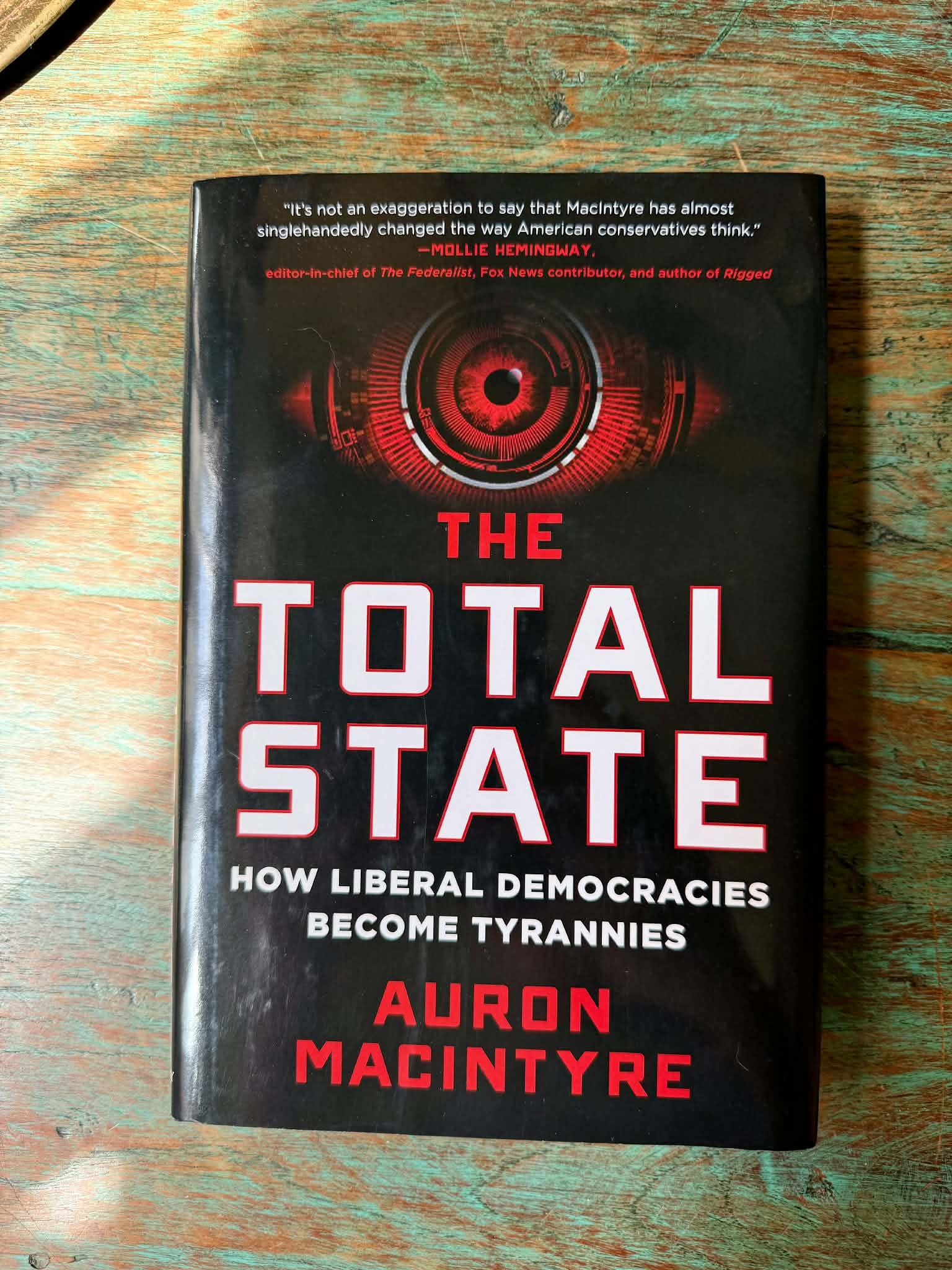
The Total State: How Liberal Democracies Become Tyrannies
by Auron MacIntyre (2024)
MacIntyre explores how America has evolved from a self-governing republic into a soft tyranny, asking how the freest nation on earth, with rights guarded by the Constitution, could become a place of censorship, lockdowns, and draconian government coercion. In his search for the answer, MacIntyre pulls from a wide array of thinkers and delves into American history, revealing how power actually works behind the scenes – and slogans. Ultimately, MacIntyre argues that an embedded managerial class with its own distinct priorities sets cultural and political limits in lockstep with mass media, all while presenting its power as neutral and based on unquestionable “expertise.” This results in a society where formal democratic structures remain in place, but power is both diffuse and coordinated, making it difficult to recognize and even harder for the average person to challenge.
If we have been told all our lives that we live in an age of unprecedented liberty protected by constitutional limits on government and individual rights, but find a government that is ever-expanding, extending its tentacles into areas previously never thought imaginable, then we must be willing to consider we were sold a falsehood. What does it mean if the Constitution does not meaningfully restrain government power? How do we approach politics if power itself does not seem to conform to the rules we have been taught since we were young? Why has liberal democracy, a system built on the principles of freedom and popular sovereignty, yielded a level of control that most tyrannical kings of old could only dream of? (pg. xxii)
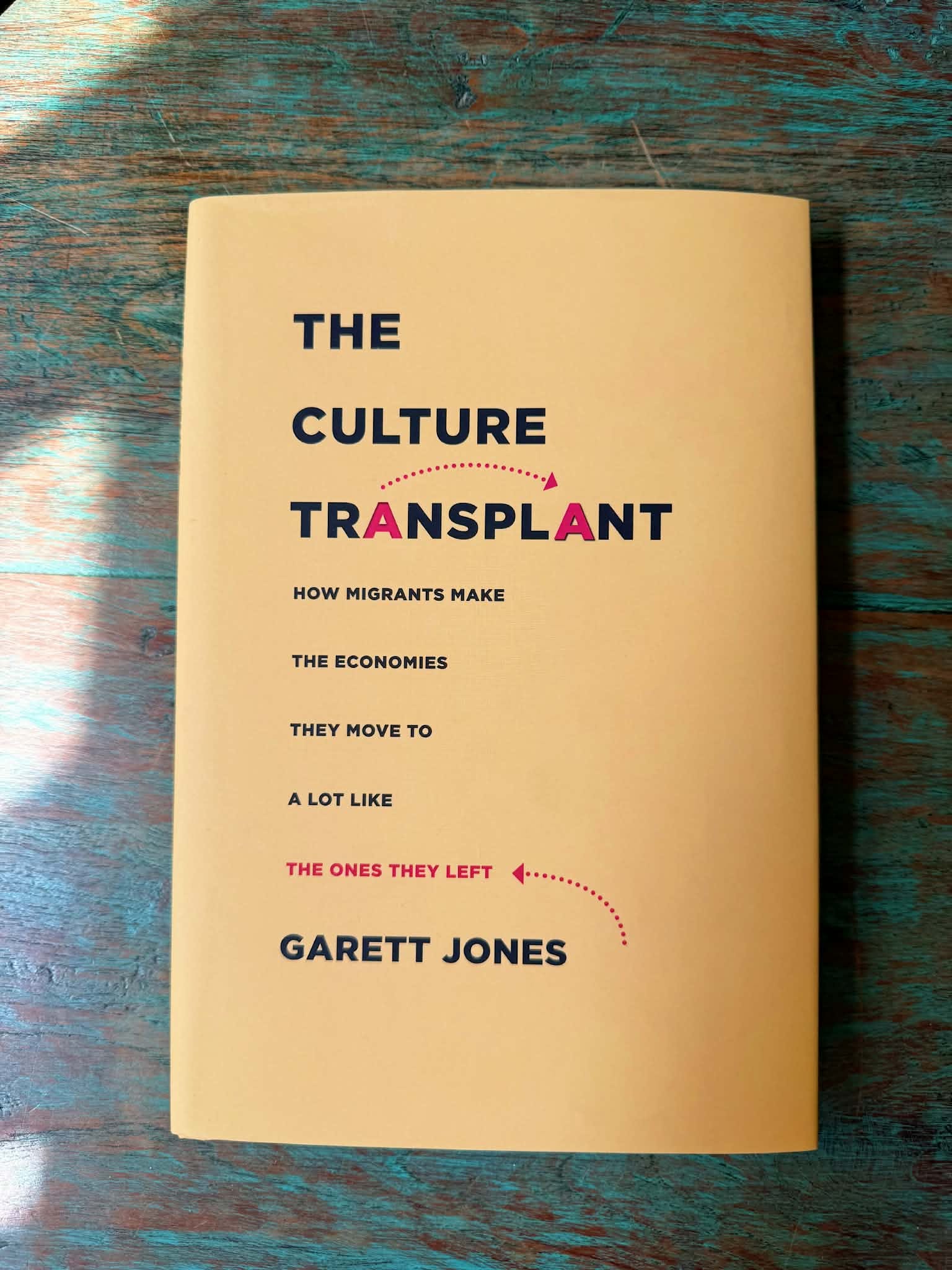
The Culture Transplant: How Migrants Make the Economies They Move to A Lot like the Ones They Left
by Garett Jones (2022)
Assimilation is a myth and diversity is not a strength; this is my takeaway from economics professor Garret Jones’ survey of relevant research from around the world. Rather than quick and full assimilation, this book demonstrates that immigrants retain salient cultural traits for many generations. This shapes their economic and political patterns, which makes their new countries more like their old countries – a culture transplant. If immigrants come from thriving nations this can be good, but if they come from unsuccessful nations, it’s not.
This book is not polemical, Jones is cautious as he examines vast sets of empirical data. But that is the book’s strength; the facts show that cultures differ quite a lot, they persist when carried elsewhere, and, if enough immigrants arrive, they remake society – in ways good and bad. We mistakenly think that allowing immigrants to flee their problematic nations is compassionate, when really they often bring with them the cultural, economic, and political problems they want to escape, eventually making their new country more like the old, to the detriment of all.
… immigration, to a large degree, creates a culture transplant, making the places that migrants go a lot like the places they left. And for good and for ill, those culture transplants shape a nation’s future prosperity. (pg. xi)
Bel Canto
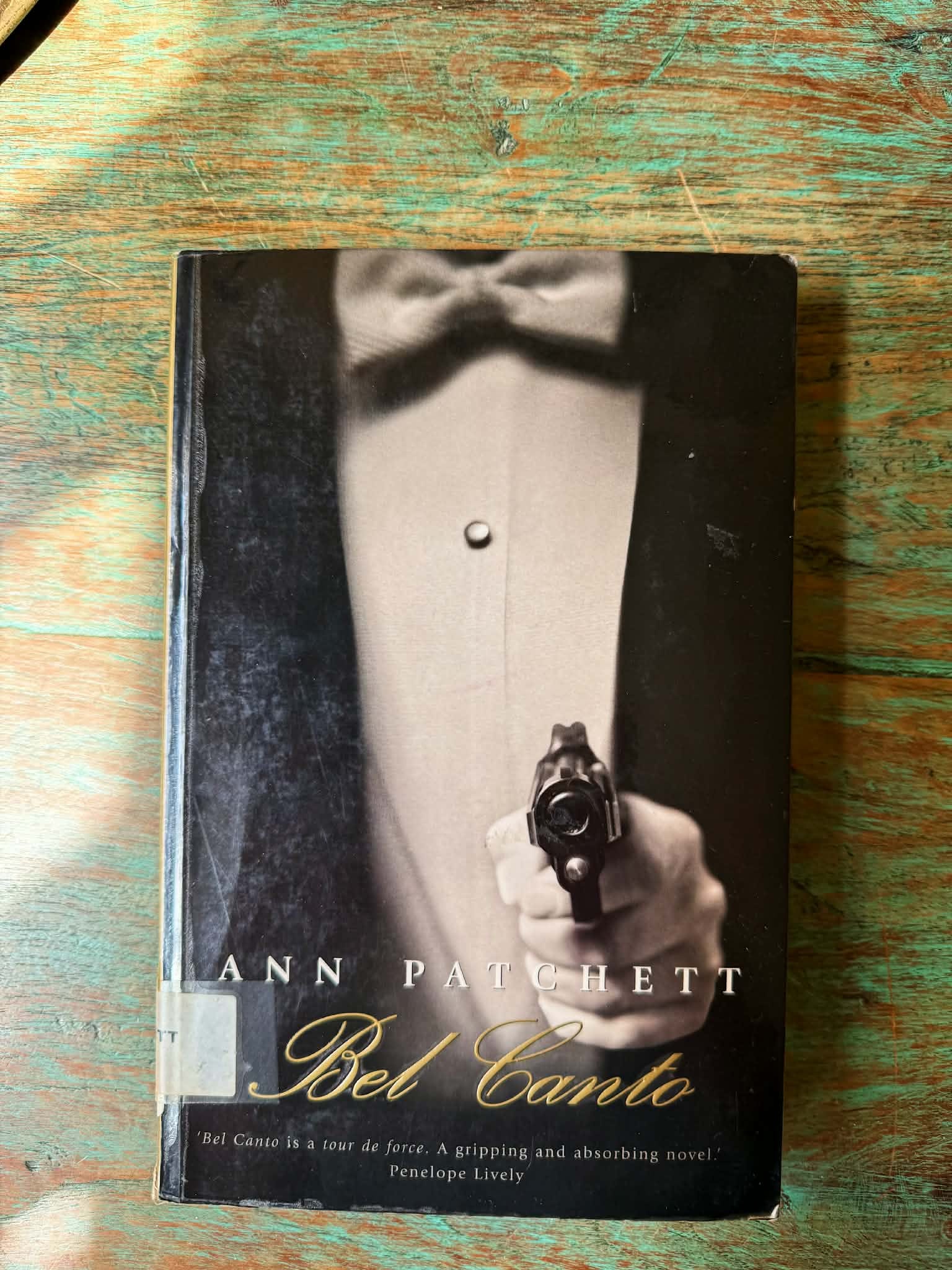
by Ann Patchett (2005)
Bel Canto begins with an opera singer performing at a lavish birthday party in a South American country. Just as she concludes her stunning performance, a group of armed guerillas burst in and take all of the guests hostage. While this premise suggests an action-driven drama, the novel is nothing of the sort.
Instead, it unfolds as a quiet character study of the odd array of people who find themselves confined together, captors and captives alike. The story is contemplative and almost dreamy, lingering on music, language, longing, and the fragile beauty of shared humanity. Reading it felt like looking at a watercolor painting, soft-edged and impressionistic, and so unexpectedly moving that it left me with a heightened sense of life’s preciousness and the strange grace of human connection.
“Look at this night: the moon a floodlight washing over what had once been an orderly garden, the moonlight pouring over the high stucco wall like water. The air smelled of the thick jasmine vines and the evening lilies that had long ago finished their work and closed up for the day. The grass was high, past their ankles and brushing heavy against their calves, and it made a shushing sound as they walked so they stopped to look up at the stars, forgetting they were right in the middle of a city block. There weren’t more than half a dozen stars to see.”
American Insurgents, American Patriots: The Revolution of the People
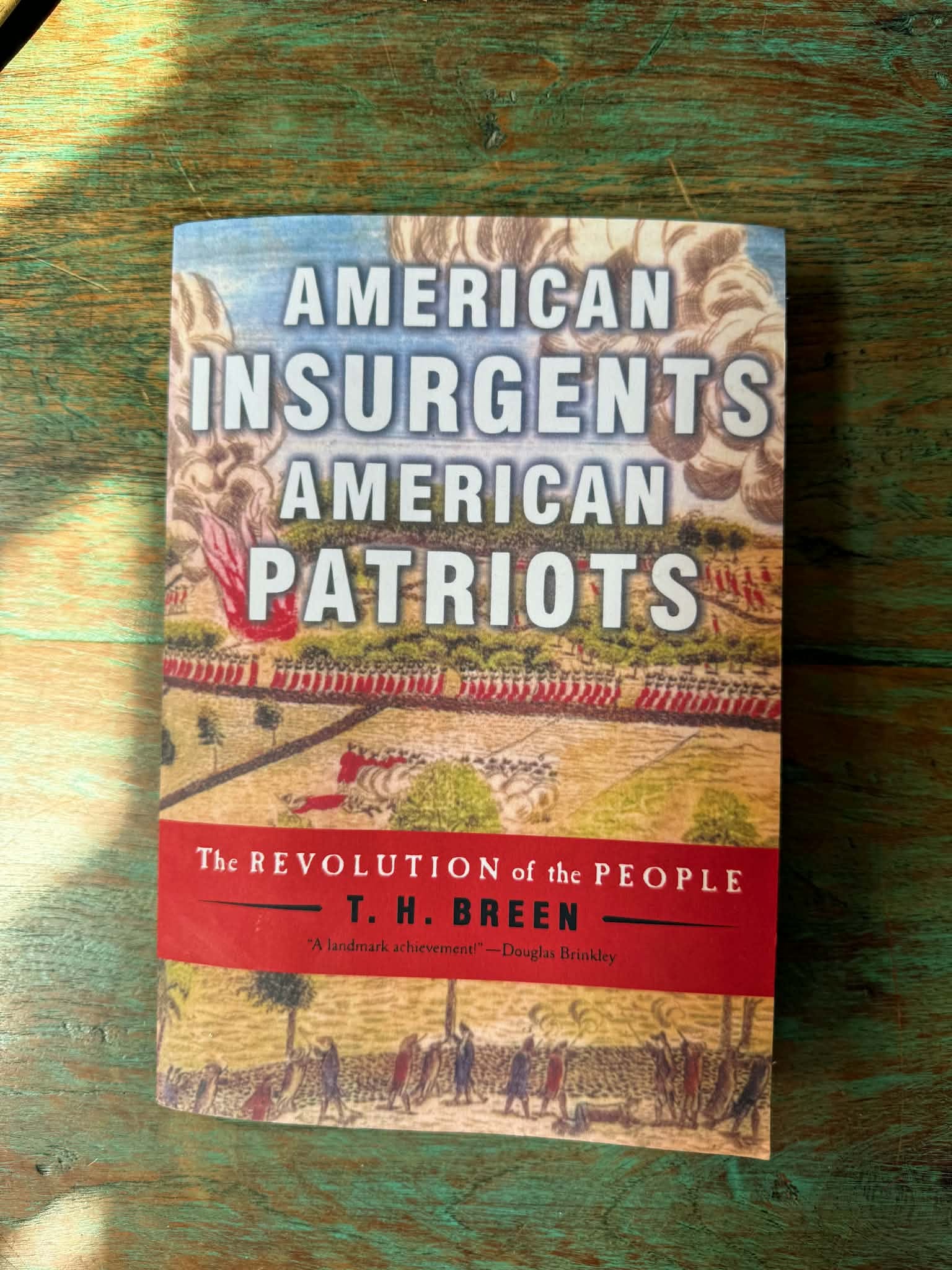
by T.H. Breen (2011)
While many histories of the American Revolution document the deeds of the Founding Fathers, Breen turns the spotlight onto average Americans to reveal how they experienced this momentous period. What he finds is that it was the average American, through their daily choices and local organizations, that were driving the Revolution. What is striking to me is how their actions revealed a shared American identity, as colonists across the colonies, separated by distance and custom, came to recognize themselves as participants in a common cause. Ultimately, this book demonstrates that the American people predate America; the Constitution did not make the American people, rather it codified the pre-existing political habits, moral assumptions, and communal practices already in existence.
Without the people, however, there would have been no Revolution, no independent nation. Confident of their God-given rights, driven by anger against an imperial government that treated them like second-class subjects, American insurgents resisted parliamentary rule, first spontaneously, as loosely organized militants who purged the countryside of Crown officials, and then, increasingly after late 1774, as members of local committees of safety that became schools for revolution. (pg. 3)
Right at the Wrong Time: Enoch Powell, mass immigration, and the speech that Britain was not prepared to hear
by Celina101 at Celina’s Substack
Powell’s Rivers of Blood speech mixed classical allusion with social critique. He decried Britain’s “total transformation to which there is no parallel in a thousand years of English history”. His core demand was drastic population control: “the total inflow for settlement should be reduced at once to negligible proportions”. Allowing “some fifty thousand” dependents in each year was, he said, “literally mad” for Britain. Powell proposed even incentivising voluntary re-emigration, one newspaper reported he urged “generous grants and assistance” for immigrants who chose to return home. In his analysis, every social problem was blamed on unchecked demographic change. Powell argued that while “many thousands” of immigrants wanted to integrate, a majority did not; and more, he insinuated some immigrant leaders sought “actual domination” of others.
You Are The Slop: We ask “can AI mimic true human creativity?,” but the more disturbing question is - how many humans even know what creativity looks like?
by Conor Fitzgerald at The Fitzstack
In that sense AI is proving to be a kind of inverted Turing Test - if the purpose of that test is to prove the sophistication of a machine appearing to display human-like intelligence, AI is highlighting the generic and standardised nature of much of what humans enjoy as art, thought and entertainment; and the inability of humans to recognise the difference between something new or different, and a recycling and reordering of familiar patterns in a competent way.
Resonance of Lost Americana: the Folkways that Once Were
by Dave Greene at Letters from Fiddler’s Greene
There is one strange thing about folk-hipster culture: we endlessly discuss its form, but never its essence. Everyone knows the outward stereotype of the hipster: flannel shirts, strange hats, Victorian furnishings, craft beers, pretentious factoids, and specially curated consumption habits. From Portland to Seattle to almost any other urban center, the scene was always the same: loved until it descended into self-parody and slowly became just another piece of internet cringe. But regardless of our awareness of what went wrong, I always wonder why we don’t try to interrogate further how all of us found ourselves in that specific place, pursuing such strange cultural attractions at that odd moment in history.
Rural Ingenuity: Testing Tools with Clear Eyes in an Age of Anxiety
by Ryan B. Anderson at The Bully Pulpit
Artificial intelligence is worthy of our skepticism but also belongs within this same evaluative tradition. Tractors once raised fears about labor, and electrification reshaped work without erasing it. Each tool extended human capacity while demanding judgment and responsibility. AI holds similar promise in agriculture, energy management, logistics, and land stewardship: predictive tools can reduce waste, precision systems can lower inputs, and smarter infrastructure can improve resilience. None of this means new tools are harmless however. Powerful technologies carry real risks because they amplify human intention, for good and for ill. Artificial intelligence can be used to manipulate, deceive, or centralize control just as machinery once displaced labor and industrial processes scarred landscapes when handled without restraint or virtue. Rural America has never been naïve about power but it has insisted on responsibility, demanded accountability, and corrected course when consequences became clear. The answer has never been paralysis. It has been a disciplined use guided by people who remain morally awake to what their tools can do.