
Why Everything is Fascist Now
The Tyranny of Openness

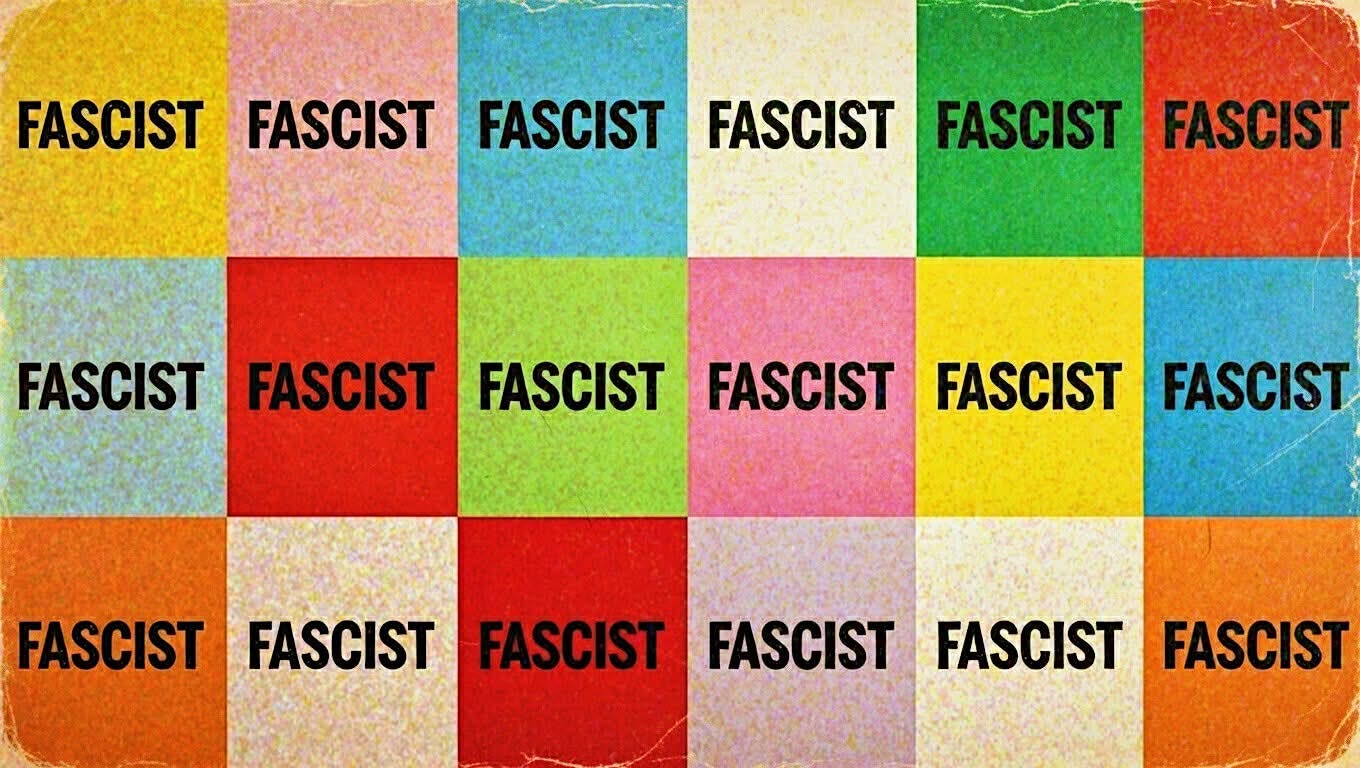
Some of my former friends were posting about me online, lamenting the sad fact that “Natasha went off the deep end and became a fascist.”
Which of my political opinions have caused these former friends to declare me a fascist? Stuff like: Sensible immigration policy is good. Gender transitions on kids is bad. The second amendment is good. The nuclear family is good. Offshoring jobs is bad. Law and order is good.
I actually know the definition of fascism so I know my political beliefs aren’t anywhere near it. But I also know I’m not the only one this has happened to.
So why has it become a common knee-jerk reaction to label anyone who disagrees with liberal dogma a fascist?
Openness or Auschwitz
To answer this question we have to understand how deeply World War 2 traumatized the Western world. Millions of people were killed and millions more had to reckon with the aftermath. Much of Europe lay in literal ruins – cities flattened, economies shattered, political legitimacy exhausted – and it had to be rebuilt.
Government planners, economists, and intellectuals were forced to ask, in practical terms, how to rebuild nations in a way that would prevent another descent into totalitarianism. “Never again” became their organizing principle – but first they had to figure out why so many had succumbed to fascism in the first place. After all, it didn’t spring out of nowhere complete with jackboots and rallies, so where did it really begin?
These experts came to believe that the roots of fascism came from habits of mind formed early in life. Even normal traits that we otherwise think of as ordinary were now seen as training people to potentially accept totalitarianism.
Traits like obedience to authority figures, discomfort with difference, and a tendency to accept tradition. Even a strong belief in right versus wrong was seen as dangerous because it taught people to see the world in absolutes. Traditional family structures – parents and kids - were now formative sites of dangerous hierarchy, teaching children unquestioning obedience and submission to authority. A community’s attachment to their history was now treacherous because it made people receptive to exclusionary thinking.
There were objections.
Some pointed out that the societal traits now seen as potential vectors of fascism had long been aspects of Western life without erupting into authoritarianism. And some argued that fascism could more aptly be seen as the result of the collapse of tradition. In the wake of World War 1, Germany had been shattered by social and economic chaos, leaving people vulnerable to a political movement that offered decisive authority and moral certainty.
But the experts shaping post-war institutions had lived through total war, genocide, and the near collapse of Europe; they were traumatized and traumatized people often misidentify causes and grasp at totalizing solutions.
And so it came to be seen as self-evident that Western traditions, heritage, and the family structure were seedbeds of proto-fascism. So the answer to the question – how do we prevent this from ever happening again? – was obvious: weaken anything that produces potential fascist thinking.
In his book, The Return of the Strong Gods, RR Reno chronicles the development of this post-war effort by examining the thinking of the influential figures whose work guided it, like Karl Popper, Friedrich Hayek, and Theodor Adorno, among others. Through books, essays, academic conferences, policy advising, and shaping cultural institutions, these ideas were taken up by the ruling class to create the guiding imperative of the Western World: openness or Auschwitz.
This retooling was not done in a secretive conspiratorial way; to the contrary, it was widely debated and then largely celebrated with relief: the experts have figured out how to fix society so we can live in prosperity and peace! And so these ideas were advanced in books, schools, universities, and international institutions and embraced by the public as a kind of moral vaccine that would prevent another dangerous outbreak of war.
This “openness” was meant to balance the norms of the Western world, to add a healthy emphasis to the longstanding liberal traits already in existence in order to dampen authoritarian impulses. People could still love their country - just not too strongly. They should be skeptical of authority. They should be open to other cultures and never consider theirs superior. Whatever religious beliefs they held should remain private, not imposed on others. Western people were to be open-minded and non-ideological.
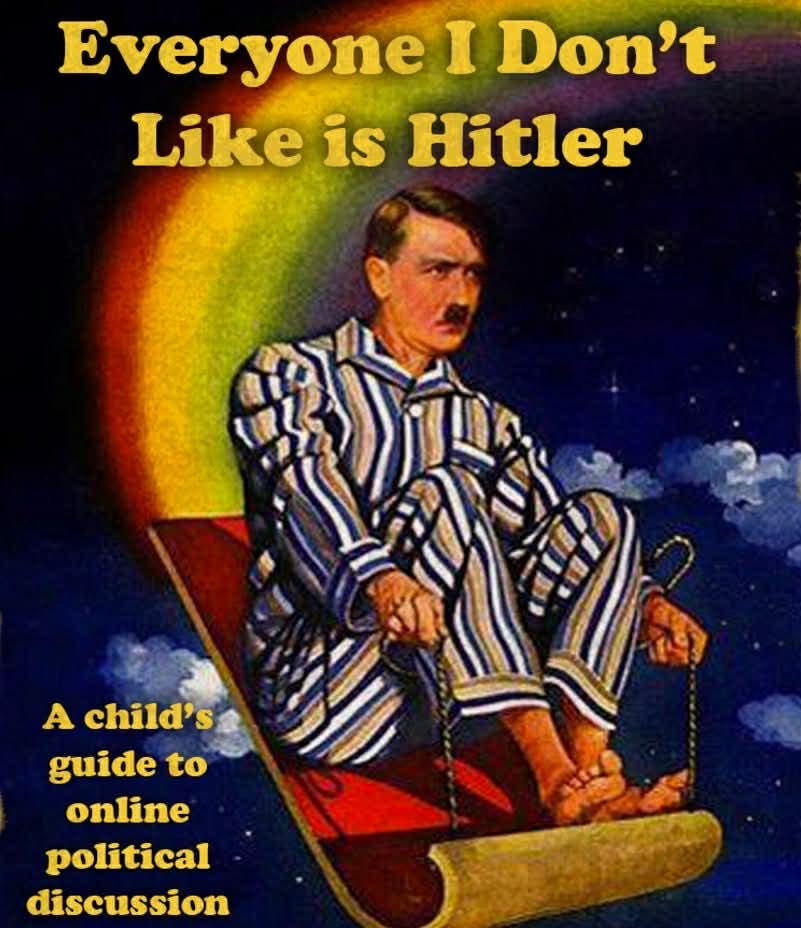
But, after a war that had seemed like the end of the world, the ethos of openness had an understandable sense of moral superiority to it. And that sense of superiority gradually took on ever more persuasive power.
As NS Lyons writes, “If it’s assumed that the only options are “the open society or Auschwitz” then maintaining zero tolerance for the perceived values of the closed society is functionally a moral commandment. To stand in the way of any possible aspect of societal opening and individual liberation – from secularization, to the sexual revolution and LGBTQ rights, to the free movement of migrants – was to do Hitler’s work and risk facilitating fascism’s return (no matter how far removed the subject concerned from actual fascism).”
And so the imperative toward openness became ever more dogmatic.
The media celebrated breaking norms while portraying family, religion, and patriotism as quaint but archaic. In education, teaching shifted from the transmission of wisdom to the facilitation of skepticism. National identity was softened into abstract values having nothing to do with heritage. Immigration increased steadily as the ethos of assimilation was replaced by multiculturalism. In politics, openness was expressed through supranational governance and bureaucratic safeguards. In economics, free markets and globalized trade would weaken nationalism. In psychology, strong convictions were seen as evidence of pathological rigidity; to be mentally healthy was to be open-minded. In art, provocative subversion replaced beauty and meaning. In family life, the nuclear family was recast as repressive. In gender roles, fixed distinctions were now arbitrary restraints to overthrow.
These ideas spread the way ideas do: through prestige, incentives, and imitation. Few conceived of this push toward openness as promoting a specific ideology, so thoroughly was society saturated by the ambient messaging that open = good and closed = bad that most people accepted it as self-evident: It’s not politics, it’s just being a good person!
Getting ahead in government, academia, media, and the corporate world meant operating among people trained in the same worldview. In this way, without any shadowy cabal required, a shared set of ideas came to dominate much of the Western world simply because they were the price of admission to status, influence, and legitimacy.
The Cold War gave America an existential threat to rally around, requiring the stoking of patriotism and national effort, thereby delaying the total obliteration of norms. But the 50s, which are often decried as being conformist, were not any more conformist than any other decade. What they were, though, is the era when “experts” became paranoid about conformity, seeing it as a harbinger of fascism. The cultural revolution of the 60s, therefore, should not be seen as an organic uprising, but as the moment when the top down push to dissolve societal norms took full effect.
By the time the USSR collapsed there was little left to hold back total dissolution. There would be quibbles over exactly how fast the progress should go, but this was the governing mandate across the political spectrum. In America, the Democrats emphasized openness through culture, focusing on dissolving social norms around family, culture, gender, and religion in the name of tolerance. The Republicans emphasized economic openness through free markets and globalization while attempting to preserve social norms. But by the ‘90s, the Democrats had accepted globalization, while the Republicans parroted the language of diversity as loudly as anyone.
By the turn of the millennium, the “open society” was triumphant. As Lyons writes, “For eight decades now the old elite, left- and right- wings alike, has been unified by their shared prioritization of the open society and its values.”
And so today every limit must be eradicated. Open borders are a moral necessity. Biological sex is a social construct to transcend. Marriage is endlessly redefinable. Nations are abstractions with no moral claim. History is something to apologize for. Religion is a private eccentricity. Globalization is inevitable. The only thing remaining to rally around, the only defining trait the West is permitted, is the celebration of “diversity is our strength” – because diversity is, of course, the ultimate symbol of no shared identity at all.
The Danger of Dissent
It turns out that trying to dissolve every shared norm and inherited bond to remake the world into a globalized shopping mall where individuals are united only by their desire to buy the next thing, has some drawbacks.
The open society has been good for the few while being bad for the many.
Economic openness hollowed out industries and stripped stable jobs from entire regions, exacerbating income inequality. Social pressures and a degraded quality of life led many to delay or opt out of starting a family. Mass immigration rapidly shifted demographics making people strangers in their hometown while it also suppressed wages and overburdened social services. Civic institutions and churches weakened, giving people fewer places for belonging. Elite institutions taught that American heritage was shameful, leaving people conflicted about the past that had once given them identity.
In ways big and small, the openness imperative stripped people’s lives of meaning, prosperity, and a sense of belonging.
But opposition is seen as dangerous. To point out that it has done real damage is to be a traitor to the Western consensus. To display fondness for inherited norms is to out oneself as a fascist. And once someone is seen as a fascist, their arguments no longer need to be considered, they can be dismissed outright as dangerous.
The people most negatively impacted are the working class but because the post-war consensus unraveled national solidarity, American elites don’t care much about the working class. In fact, they often disdain them and make no effort to hide it. After all, working class Americans are seen as more patriotic, religious, and conservative than the upper classes, and since we now know all of those things are crypto-fascist, we have to look down on them to make it clear we are the good guys.
And any politicians who are perceived to be a threat to the establishment unite the establishment in a torrential outpouring of condemnation. The emergence of such disruptive political figures do not meaningfully reverse a worldview that has been embedded for generations in education, bureaucracy, media, and even corporate life. Whatever electoral shocks occur, the logic that pushed openness as a moral default remains intact and self-reproducing.
And it is an effective ruling strategy: the establishment is always pushing toward maximum openness in order to prevent the supposed return of fascism. Any criticism is taken as proof that fascism still lingers, which gives the establishment a mandate to ignore any outcry while pushing forward with their agenda - while fashioning themselves as heroes.
And doing the front-line work of the establishment are the people like my former friends, who act as the decentralized censorship regime of the establishment. As Auron MacIntyre writes in his book, Total State: How Liberal Democracies Become Tyrannies, “The modern citizen lives in a panopticon of coworkers, family, friends, and superiors. Each is constantly attempting to ensure not only that no wrongthink is ever publicly expressed, but that a sufficient stream of rightthink is dutifully posted.”
The openness imperative has become a form of elite signaling, a way to indicate you are superior to the rubes who are gauche enough to have a problem with it. Ironically, this “openness” is still packaged as subversive, even though it is done with the approval – and blunt encouragement – of the establishment. In reality, though, it disrupts nothing and subverts no one, only obediently reinforces the norms of the ruling class.
A Devouring Logic
Some years back I was talking to a friend, a middle-aged, well-educated, well-traveled American. We began talking about politics and I said something like, “America has things in its past that were bad, just like all countries do, but there’s also a lot in our past we should be proud of. We’ve done good things for the world.”
My friend recoiled. He physically leaned back and put a hand to his chest.
Then, in a shocked voice, he said, “Natasha, you sound like…a nationalist.”
The last word dripped with horror.
And this is where we are today, because the rationale of “openness or Auschwitz” is totalizing. Once you create the premise that the only way to prevent fascism is to obliterate every limit, border, tradition, or shared norm, you create a devouring logic that must destroy everything. It moves ever leftward and it can never stop. It can never declare that enough has been done because that is a declaration that you can go too far, that maybe there is too much progress, that perhaps some things should be left standing.
And that, of course, would be fascist.
So now we have a world where everything is fascist, including: physical fitness, drinking milk, classical art, fashion, fantasy literature, and nature writing.
What began as a well meaning post-war effort took on a life of its own. Openness became an acid poured into society, dissolving every shared source of meaning. In stripping people of what was handed down – family, faith, culture, moral confidence – it left us isolated and, ironically, more susceptible to coercive moral movements. Today many cling to this rigid ideology that sees the specter of fascism everywhere and dogmatically divides the world into the pure and the damned. It insists on absolute moral categories while denying any stable moral foundation. It has, therefore, built a world where everything is a threat, where disagreement is a moral failing, and where everyone, sooner or later, is called a fascist.
Further Reading:
Toward a Moral Imagination of Home: Everyone is an Expat Now
The Department of Indoctrination: the Left’s Long March through America’s Schools
Nation, Not Notion: The American Inheritance