


January: Reads + Recommendations
February: Reads + Recommendations
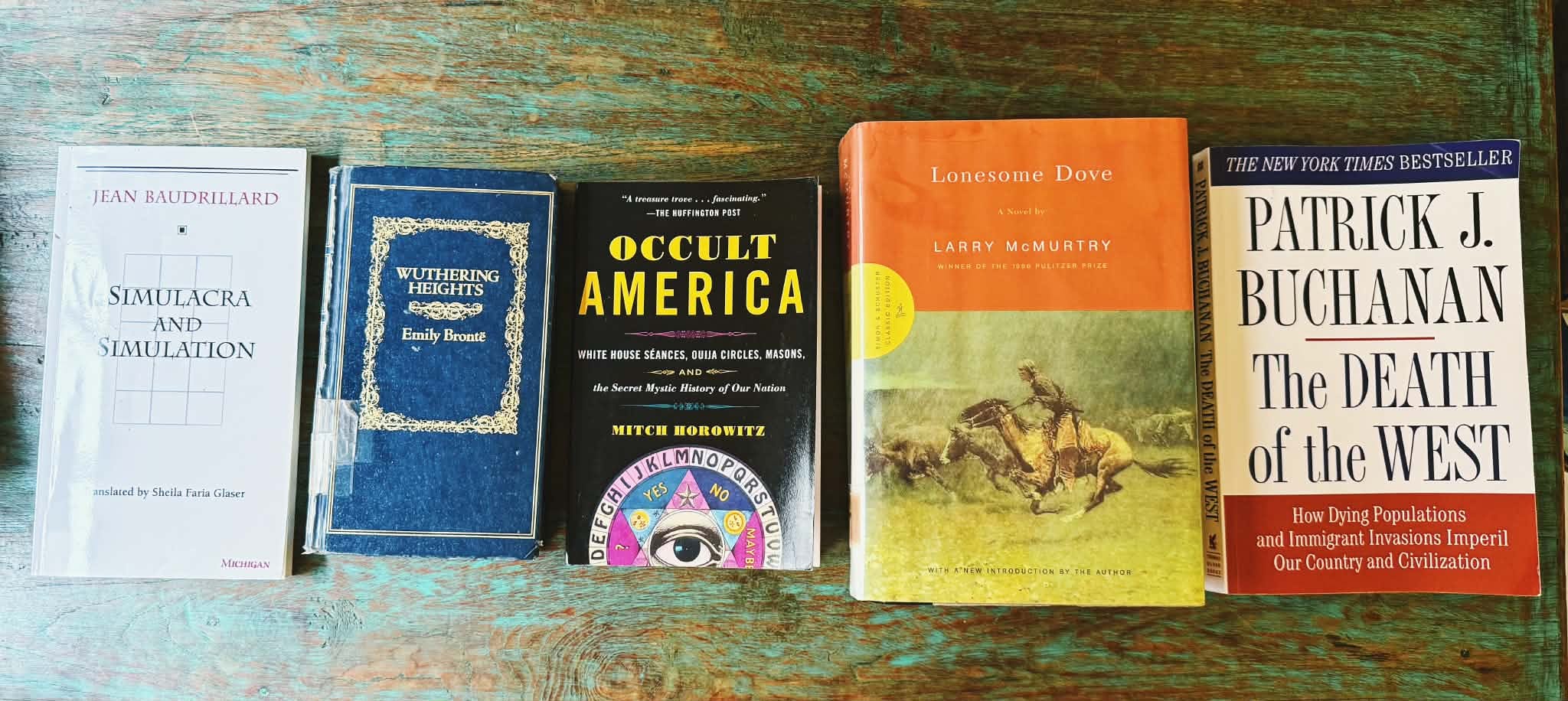
I read five books in March, which seems to be the average I get through in a month without sacrificing my cherished phone-scrolling time. This month I was reading about simulacra, Gothic romance, America’s occult history, cowboys in the fading days of the Wild West, and America’s culture war.
Here are the book reviews + a round-up of some of the best essays I read this month:
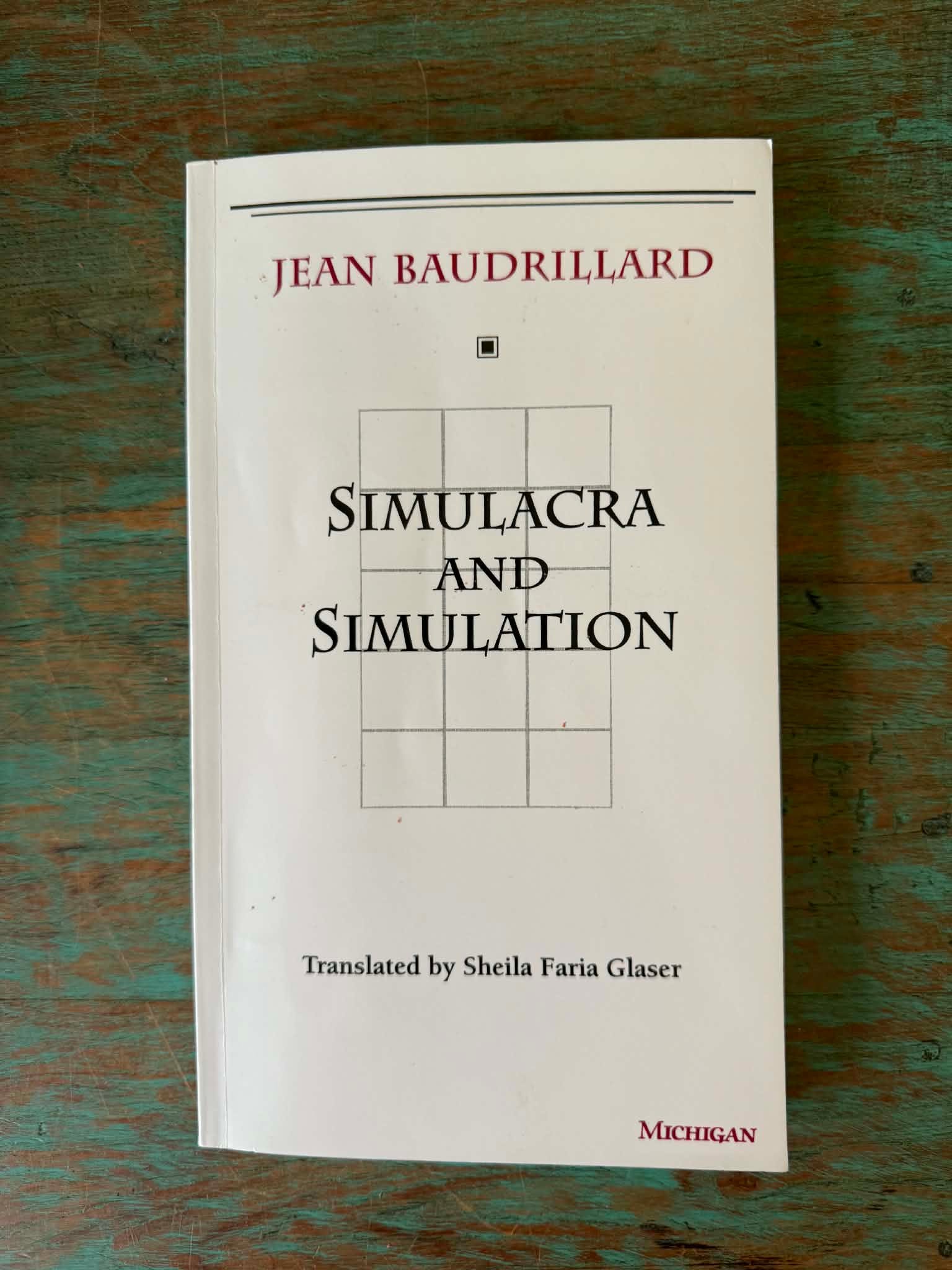
Simulacra and Simulation
by Jean Baudrillard (1981)
I read many portions of this book previously, but had never set down to immerse myself in it all in one stretch. Reading it like this is a heady experience. I enjoy Baudrillard immensely. Though we disagree on many things, his over-the-top prose and knack for pushing arguments deep into schizo territory brings me joy. Here the French philosopher swims through interrelated topics - Watergate, television, nuclear weapons, Hollywood films, nihilism, and more - to argue that in modern society representations no longer reflect reality but replace it, seeming more real than the real itself. Ultimately, this gives rise to simulacra, copies without originals, signs and images that refer only to other signs, no truth required. As a result, distinctions between true and false, real and fake, disintegrate, as we experience our world not directly but through layers of mediated images and narratives that determine what we think of as real.
It is no longer a question of imitation, nor duplication, nor even parody. It is a question of substituting the signs of the real for the real, that is to say of an operation of deterring every real process via its operational double, a programmatic, metastable, perfectly descriptive machine that offers all the signs of the real and short circuits all its vicissitudes. Never again will the real have the chance to produce itself – such is the vital function of the model in a system of death, or rather of anticipated resurrection, that no longer even gives the even of death a chance. pg. 2
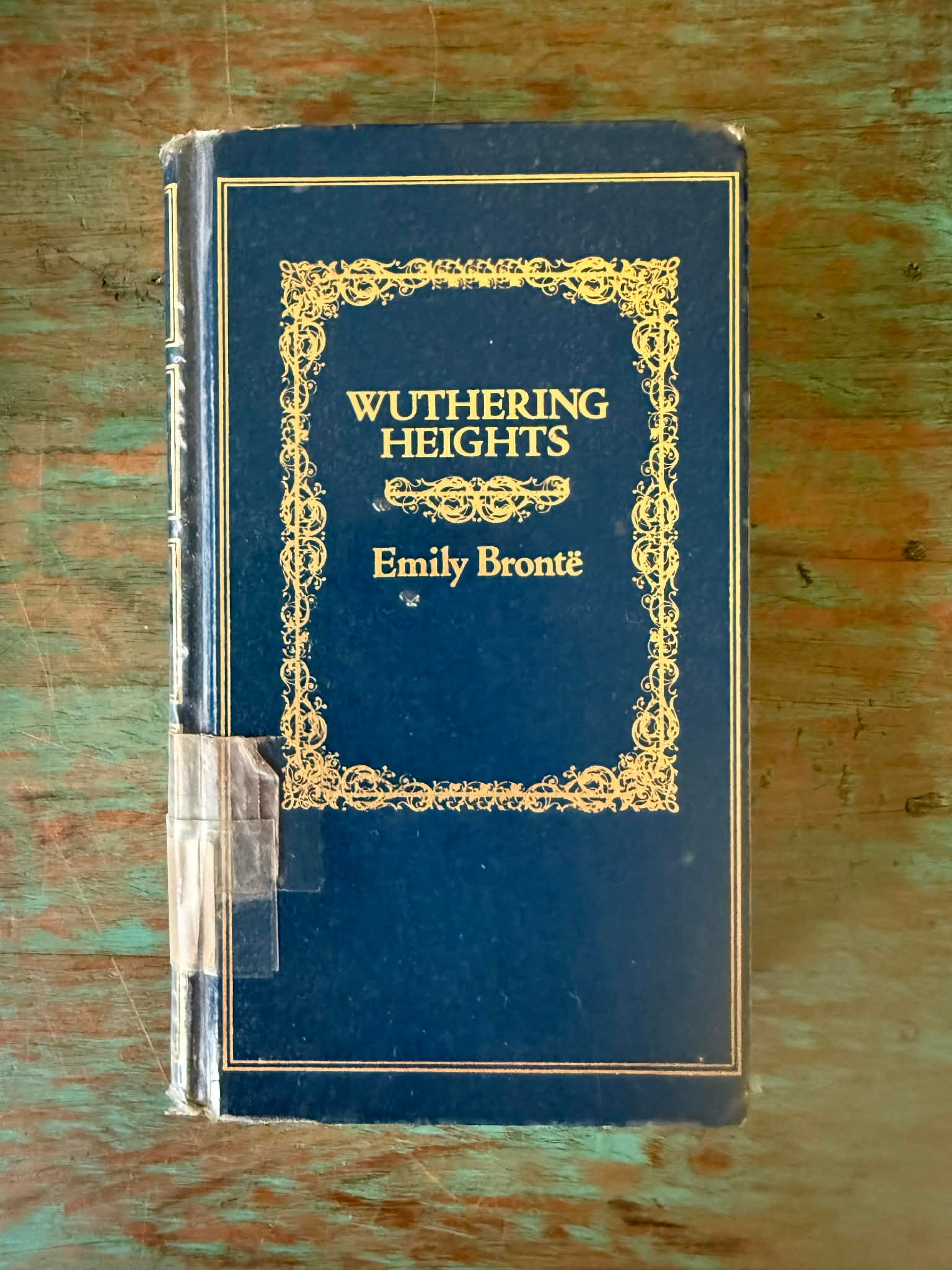
Wuthering Heights
by Emily Bronte (1847)
I never read Wuthering Heights – the quintessential angsty teen novel – when I actually was an angsty teen. But with a new film adaptation there’s been Wuthering Heights discourse all over the place, which has included the iconic 1978 song by Kate Bush. The song is so strangely bonkers and electric that I thought if the novel felt anything similar I’d have to read it…
The plot revolves around two landholding families in the Yorkshire moors, the Earnshaws and the Lintons, and features much tragic romance and tangled relationships. The novel’s storytelling framework – told secondhand, in recollections and even letters – is remarkable and a difficult thing for a writer to pull off, particularly as their debut novel written in their twenties. When it was published it was controversial and even shocking to the public and it’s easy to see why. Within the placid domestic setting the characters behave monstrously to one another; there is violence and cruelty and almost everyone is unlikable. The pervasive misery serves as a meditation on generational trauma, though there are moments of tragic beauty, particularly in how Catherine and Heathcliff describe their love. Revolutionary at the time it was written, I can appreciate the impact it had on literature while at the same time admitting it did not move me as much as I’d hoped - I like the Kate Bush song better.
If all else perished, and he remained, I should still continue to be; and if all else remained, and he were annihilated, the universe would turn to a mighty stranger.
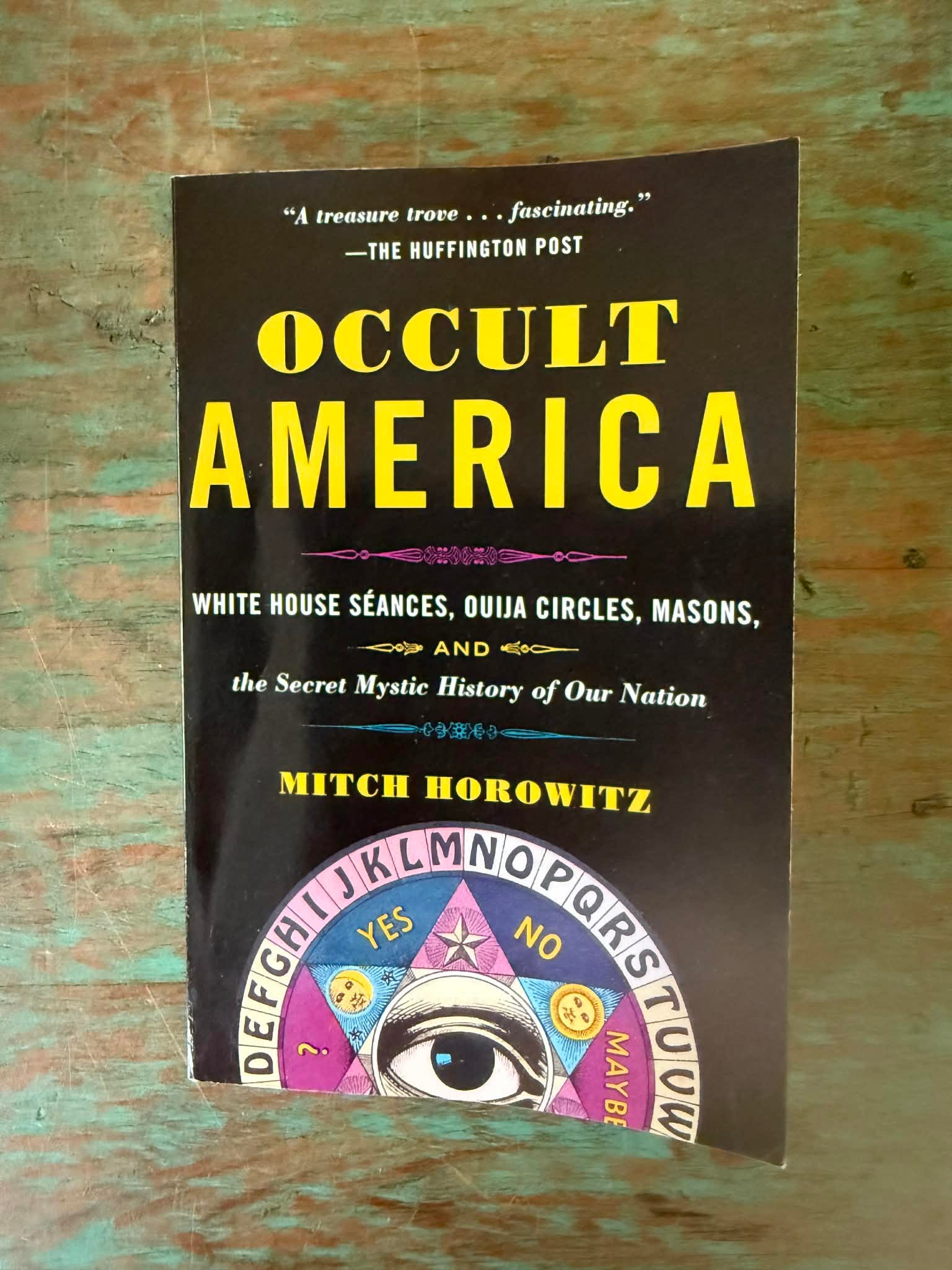
Occult America: White House Seances, Ouija Circles, Masons, and the Secret Mystic History of Our Nation
by Mitch Horowitz (2023)
This is a lively survey of the major currents in American occult thought. It traces early Spiritualism in upstate New York, the rise of Theosophy, the trendiness of Oujia boards and séances, self-help mysticism, and the way occult ideas seeped into mainstream life. One of the most compelling parts of this book was how clearly it captures America’s distinctive occult ethos – democratic, ambitious, and practical. Meaning that in America, the occult wasn’t seen as something for the rarefied few, but open to the average person as something you can use to improve your life, even to get rich. Occult America is written in an enjoyable way, but is very much a catalogue of movements and personalities, rather than delving into the deeper mythic framework I was hoping it would explore.
News drifts back to the Old World: A land existed where mystical thinkers and mystery religions – remnants of esoteric movements that had thrived during the Renaissance and were later harassed – could find safe harbor. And so began a revolution in religious life that was eventually felt around the earth. pg. 2
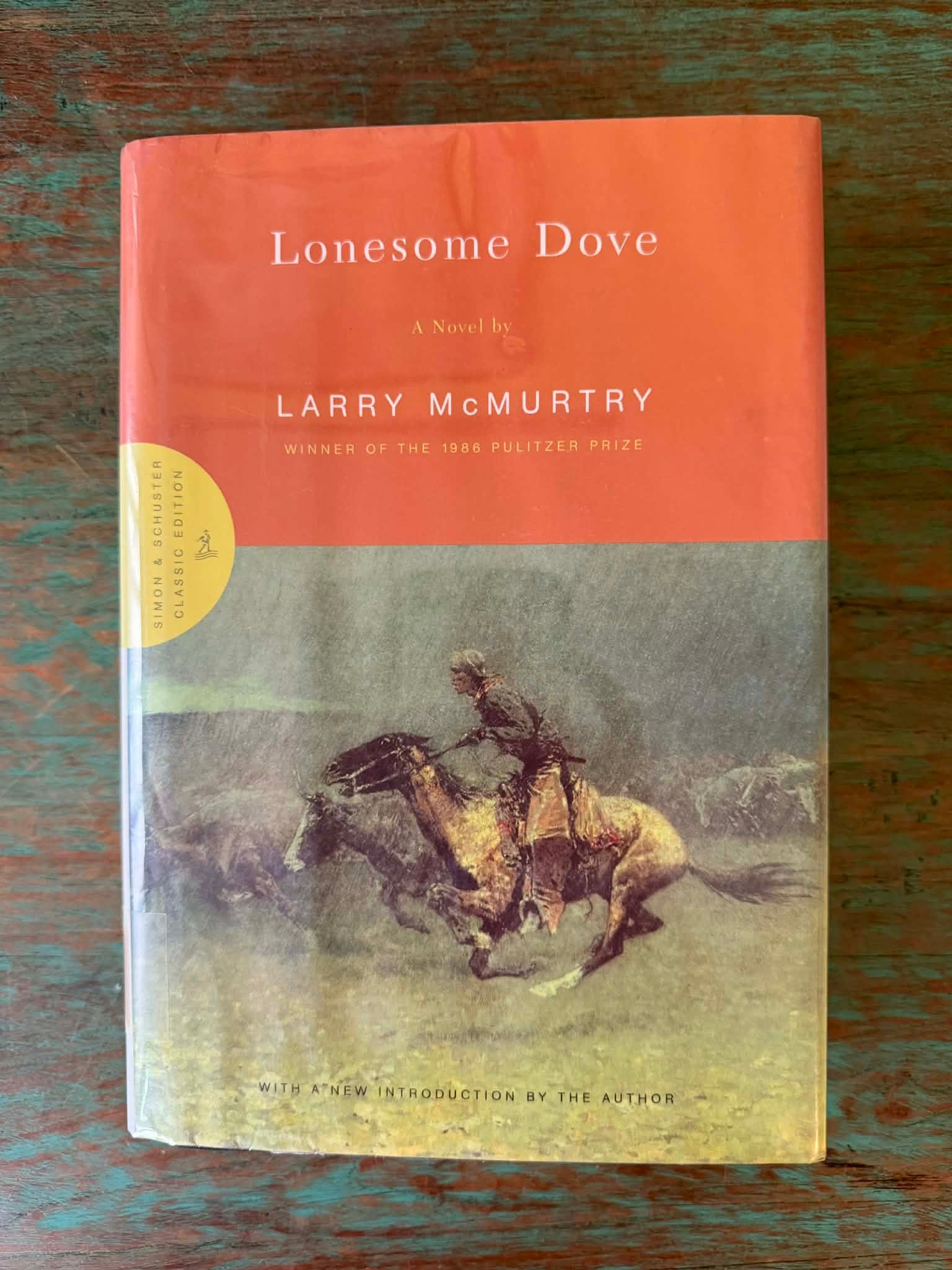
Lonesome Dove
by Larry McMurty (1985)
Lonesome Dove starts with a simple premise - a cattle drive from Texas to Montana led by two aging Texas Rangers – but the tale unfolds into a sweeping, warm, bittersweet epic, which explains why it won the Pulitzer Prize in 1986. I’ve only recently become a fan of the Western genre and when I heard this was the best of the best, I had to read it. It was so much warmer and transporting than I expected it to be, completely enveloping you in a story that builds with remarkable ease. Reading Lonesome Dove is the literary equivalent of easy-sipping whiskey, it goes down so smoothly you don’t realize how immersed you’ve become. Reading, you drift between characters, each rendered with vivid complexity, building a textured portrait of life in the fading days of the Old West – Texas Rangers, sheriffs, cowboys, bandits, Indians, and drifters – until, by the end, you feel like you’ve lived the story, spent long days in the saddle, nights around the camp fire, and witnessed an entire world passing. Lonesome Dove is a monumental achievement in American literature and I cannot recommend it highly enough.
The eastern sky was red as coals in a forge, lighting up the flats along the river. Dew had wet the million needles of the chaparral, and when the rim of the sun edged over the horizon the chaparral seemed to be spotted with diamonds. A bush in the backyard was filled with little rainbows as the sun touched the dew. It was tribute enough to sunup that it could make even chaparral bushes look beautiful, Augustus thought, and he watched the process happily, knowing it would only last a few minutes.
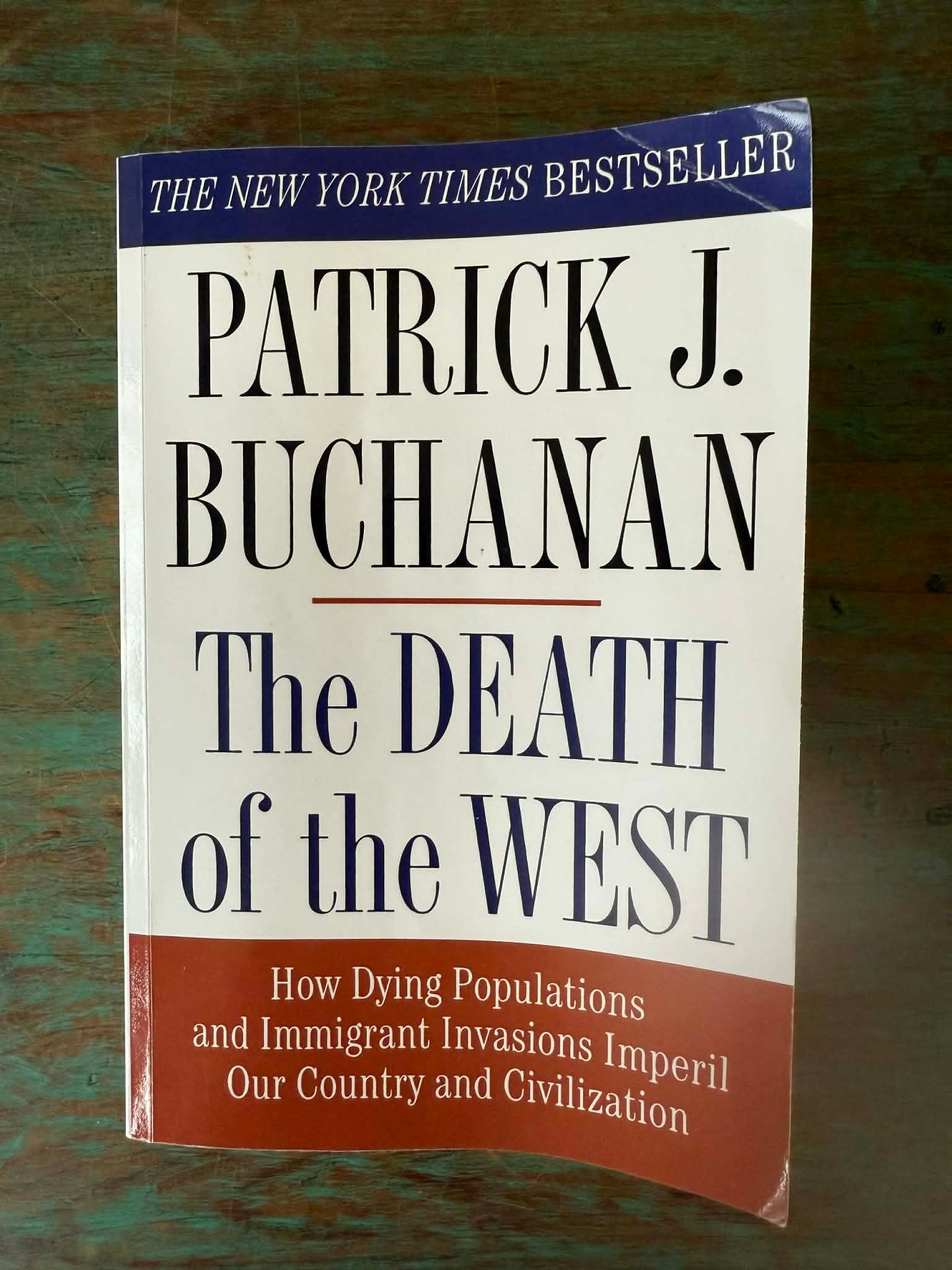
The Death of the West
by Pat Buchanan (2002)
This is a broad overview of the demographic, cultural, and ideological shifts that have fueled Western decline. Buchanan brings together themes like mass immigration, falling birth rates, why everything is called fascist now, attacks on our history, the decline in Christian belief, critical theory’s sweep of our institutions, into a narrative of civilizational erosion. Written 25 years ago, parts of it clearly show their age, but many of his core predictions feel borne out – even surpassed. This book didn’t tell me anything I didn’t already know, but as an overview of a civilizational trend it is effective. It would be the kind of introductory book I’d give to someone, especially from an older generation, who hasn’t yet encountered these arguments.
A sense that America, too, is pulling apart along the seams of ethnicity and race is spreading. Moreover, America has just undergone a cultural revolution, with a new elite now occupying the commanding heights. Through its capture of the institutions that shape and transmit ideas, opinions, beliefs, and values – TV, the arts, entertainment, education – this elite is creating a new people. Not only ethnically and racially, but culturally and morally, we are no longer one people or “one nation under God. pg. 4
And now some of the best essays I read in March:
The Way Out by Natasha Burge: a review
by Amy at News from the Homefront
The Persian Gulf pre-Y2K frames the narrative of The Way Out. This is a story from another time and another perspective. The Gulf War, carried out in the early 90’s and in the memory of the author, features little in the story, except to remind of the constant reality with which it looms in the Middle East. Burge structures the book by chapters which count down the days to ‘the world’s end’ as the dread of Y2K was feared to bring in late 1999.
Burge’s stream-of-consciousness style is often startling, and her lavish use of color, splashed on every scene like an ever changing kaleidoscope, symbolizes emotions of trauma, guilt, sadness, passion, rage, and hope, re-create for the reader with artistic poignancy the architecture of pain, the experience of a loss of self, and the many-faceted yearnings of the human soul.
Race-Swapping: The Re-engineering of Western Mythos and the Asymmetry of Adaptation
by Celina101 at Celina’s Substack
To treat the Harry Potter universe as a blank canvas for modern demographic re-engineering is to strip it of this rich, highly specific civilisational context. It displaces the host culture, reducing a deeply English mythos to a generic, deracinated background for contemporary socio-political messaging. Fantasy worlds are not culturally neutral; they are deeply rooted in particular civilisational contexts. To treat them as infinitely malleable is itself a form of civilisational displacement.
Did the British Really Plunder India?
How the modern narrative of British “plunder” in Indian collapses when confronted with economic data, population growth, and the realities of the Industrial Revolution.
by Celina101 at Celina’s Substack
The contemporary narrative of British oppression in India is a myth “used to justify reparations and externalise the responsibility for internal social failures. The statistical reality indicates that the Raj presided over an unprecedented population explosion, a ninefold increase in textile production, the birth of the world’s fourth-largest railway, and a massive rise in literacy.
The “loot” of trillions is a mathematical impossibility, and the deindustrialisation of textiles is a myth debunked by India’s own statistical abstracts. Far from being a beneficiary of India, the British economy growth accelerated only after shed its colonial “ball and chain”. The Raj was a period of yeoman’s work in institution-building that was limited primarily by its own respect for Indian traditionalism. To defuse the conflicts fuelled by these historical myths, it is necessary to recognise that the British did not ravage India; they constructed the modern state that allows India to thrive today.”
I Escaped Bluebeard’s Castle. Lindy West Didn’t.
By Leigh Stein at Attention Economy
Reading Lindy West’s memoir Adult Braces gave me the eerie sensation that I was back inside Bluebeard’s castle. I felt physically uncomfortable not only because of the behavior of her husband Aham—who was married twice before Lindy and can only “commit” to her if he can date other women—but because of the familiar horror of a woman talking herself out of her own instincts of self-preservation and going back for seconds at the self-abnegation buffet.
I read this memoir like The Shining. The creepy twin girls in the hotel hallway: one of them is Lindy and one of them is me. One of us made it out of the cursed hotel and one of us is still inside.
Why Americans Should Care About Rhodesia: You Really Should
By The American Tribune
The real reason that Rhodesia matters for Americans is that the spiritual problem presented is one that we very much need to answer, for the same forces that destroyed it are destroying us. It, better than any other historical case study, shows how much the Western mindset shifted and how much the one now prevalent in America is at odds with our history, tradition, and culture. The basic problem is this: Is it human flourishing that matters, or commitment to a vague idea of total equality enforced by the state, whatever the consequences?
By the old metric of eudaimonia, Rhodesia was an excellent state. Long after all of its cousins—from the British home country to the American experiment—devolved into managerial rule by the average for the benefit of the worse than average, it remained an excellence-focused society characterized by flourishing in a land that had never known such a state of things before the Rhodesians arrived.
So, by its very nature, Rhodesia was unequal and hierarchical in every respect. And, as a result, it functioned well. Quite well, in fact. It had the highest living standards for blacks on the continent, was immensely prosperous, maintained classic British social culture well after taxes and war destroyed that in Britain, and was generally a society that did not just allow for but encouraged human flourishing. Eudaimonia was alive and well in Rhodesia even as it struggled against the whole world to the bitter end.
Further Reading:
January: Reads + Recommendations
February: Reads + Recommendations